

A bored dog is not being awkward for the sake of it. Most of the time, they are trying to find an outlet for energy, curiosity or frustration.
Some dogs make boredom obvious by chewing, barking or digging. Others become restless, clingy, repetitive or unusually flat. The important thing is to look at the whole picture rather than one isolated moment.
If your dog suddenly changes behaviour, seems unwell, is in pain, or starts doing something repeatedly, speak to your vet. But if the pattern is linked to long quiet days, predictable routines and too little mental stimulation, boredom may be part of the picture.
Here are five common signs your dog is bored, plus practical ways to keep them happier.
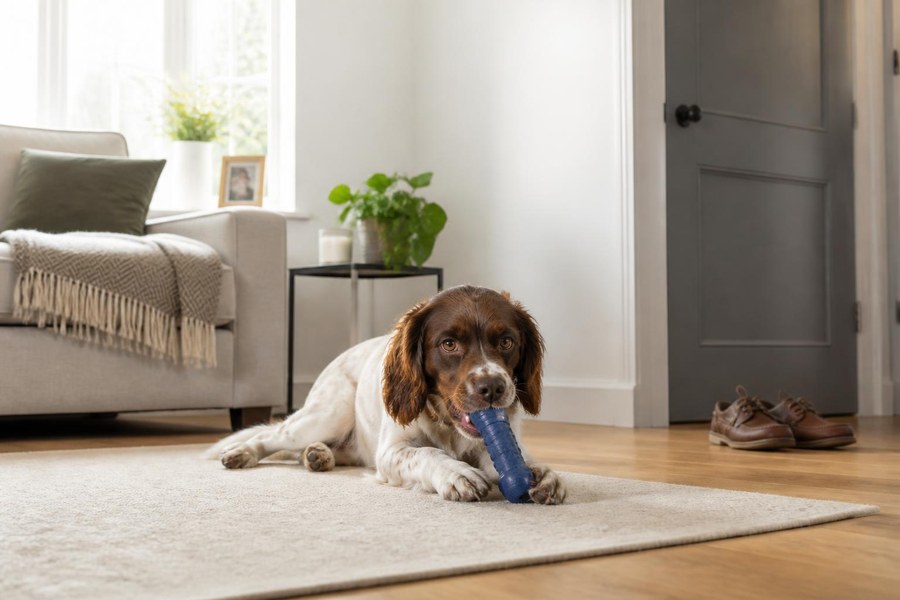
Chewing and digging are normal canine behaviours. The problem starts when your dog chooses chair legs, shoes, skirting boards, cushions or garden borders because they have nothing better to do.
A bored dog may chew because it gives their mouth something to do, uses energy and creates a result. Digging can work in a similar way. It is physical, repetitive and rewarding, especially for dogs who enjoy scent, texture or working with their paws.
This does not mean your dog is being spiteful. Dogs do not chew your belongings to make a point. They chew because it feels useful to them in that moment.
A useful first step is to look at when it happens. If the chewing appears after a long period of quiet, when your dog has had a very short walk, or when they are left without suitable outlets, boredom is a realistic possibility.
| What you notice | What it may suggest | What to try first |
|---|---|---|
| Chewing shoes, cushions or furniture | Your dog is finding their own outlet | Offer safe chew and play options, then rotate them |
| Digging in the garden after short walks | Physical energy and scent interest are not being used | Add sniffing time, searching games and more purposeful play |
| Destroying soft toys quickly | The toy may not match the dog’s play style | Supervise play and choose toys suited to chewing, carrying or tugging |
| Chewing mainly when left alone | Boredom, frustration or separation distress may be involved | Keep a diary and consider vet or behaviour support if it escalates |
The answer is not simply to tell your dog off for chewing. Instead, prevent access to unsafe items and give your dog suitable alternatives before they start finding their own ways to stay occupied.
A small selection of suitable Dog Toys can help, but variety matters more than quantity. Rotate a few toys every couple of days so they feel interesting again. Mix textures and uses; something to carry, something to chew, something to chase, and something that encourages a little problem solving.
If your dog is a serious chewer, be sure to introduce tougher toys and remove anything damaged. While no toy is completely indestructible, some are designed to withstand much tougher play than others.
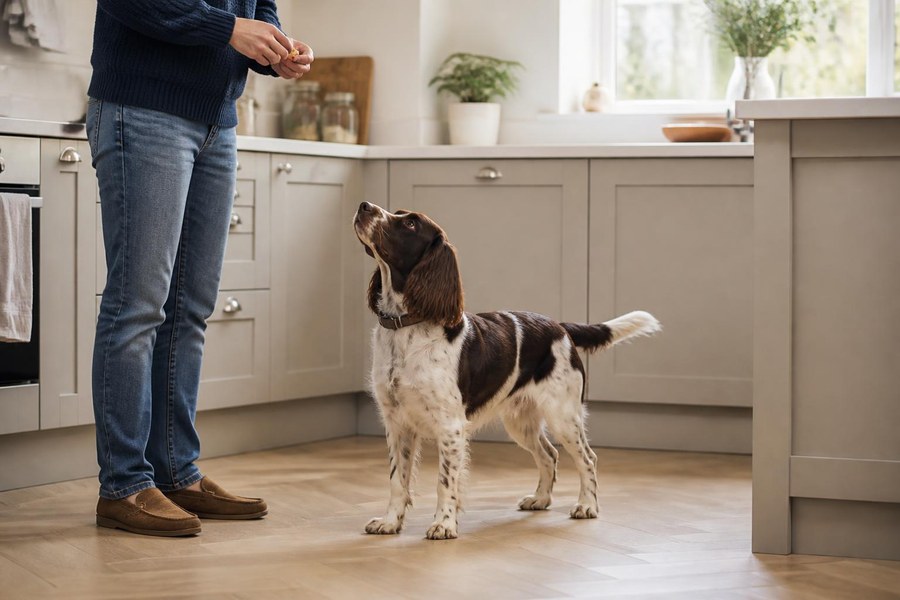
Boredom does not always lead to destructive behaviour. For some dogs, it shows through restlessness and a constant need for attention or activity.
You might notice your dog pacing around the house, following you from room to room, bringing you toys, pawing or nudging you for attention, or repeatedly getting up when they have only just settled down.
This can be easy to mistake for affection, and sometimes it is. But if it becomes constant, your dog may be asking for something to do.
Attention seeking can also become a loop. Your dog nudges you, you respond, your dog learns that nudging works, then the behaviour becomes more persistent. That does not mean you should ignore your dog’s needs. It means you need to give attention in a more structured way.
Try building small predictable moments into the day:
Short training sessions can be surprisingly tiring because they ask your dog to think. Sit, wait, touch and find it are simple enough for most households, but they still give your dog a job. If you want to develop these skills further, our complete guide to dog training covers the key principles and techniques every dog owner should know.
Keep sessions short. A bored dog does not need an hour of complicated drills. They often need a few minutes of focused interaction, followed by something calm and predictable.
If your dog becomes frantic rather than simply restless, or if they cannot relax even after appropriate activity, boredom may not be the only issue. Pain, anxiety, poor sleep and stress can all affect settling behaviour.
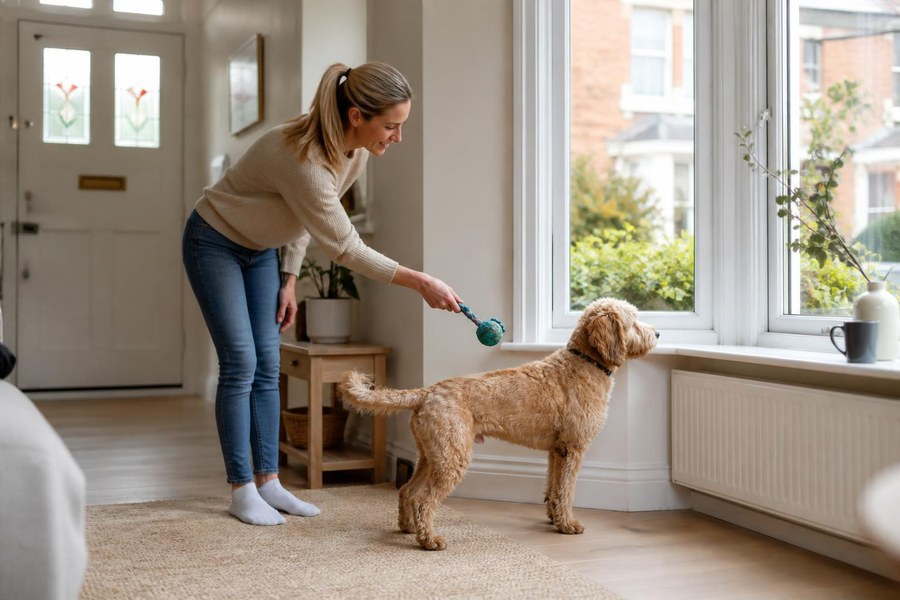
Barking and whining can have many causes, including alerting, fear, excitement, frustration and habit. But boredom can be part of the pattern, especially when a dog is under stimulated and starts creating their own entertainment.
This might look like barking at every sound outside, whining for interaction, chasing shadows, stealing household items, pestering another dog, or turning ordinary movement in the house into a game.
Before assuming boredom, check for obvious triggers. Is your dog barking at the post, people passing the window, a neighbour’s dog, children outside, or noises in the hallway? If there is a trigger, the answer may involve management as well as enrichment.
For example, a dog who barks at the front window may need:
If your dog is whining because they want interaction, avoid accidentally teaching them that whining is the best way to start play. Instead, look for a quiet moment, ask for an easy behaviour such as sit or touch, then begin the activity. That gives your dog a clearer route to success.
A helpful question is: “What job can I give my dog instead?”
That job might be finding a few treats hidden in a towel, carrying a toy to another room, practising a simple cue, searching for food in the garden, or settling with a safe chew while the house is busy.
The aim is not to stop your dog being interested in the world. It is to give that interest somewhere better to go.
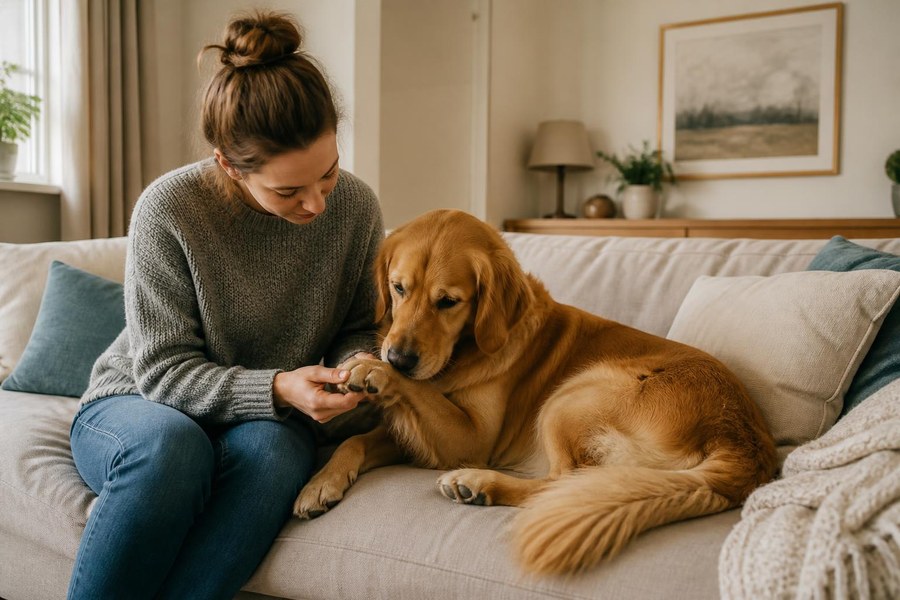
Some dogs respond to boredom with repetitive behaviours. Licking, nibbling, chewing paws, grooming the same patch of fur, or repeatedly mouthing blankets can all become soothing habits.
This is where you need to be careful. Licking can be linked to boredom, but it can also be linked to allergies, skin irritation, pain, anxiety or a foreign body such as a grass seed. If your dog is licking one paw, making the skin sore, limping, staining the fur, or suddenly grooming much more than usual, speak to your vet.
If health causes have been ruled out, boredom or stress may still be part of the picture. Repetitive licking can give the dog a predictable sensation and something to focus on. It may happen more in the evening, during long quiet periods, or when the dog has had physical exercise but very little mental stimulation.
| Pattern | Why it matters |
|---|---|
| Licking one specific paw | More likely to need a physical check |
| Licking during quiet evenings | Could be boredom, habit or settling difficulty |
| Licking alongside pacing or whining | Stress or anxiety may also be involved |
| Licking less after enrichment | Under-stimulation may be contributing |
Our article on why dogs lick their paws goes into this in more detail.
For boredom related licking, calm enrichment often works better than high energy play. Try scent games, a short training session, a gentle chew, or food spread thinly on a Dog Lick Mat. The goal is to give the dog a relaxing task, not wind them up.
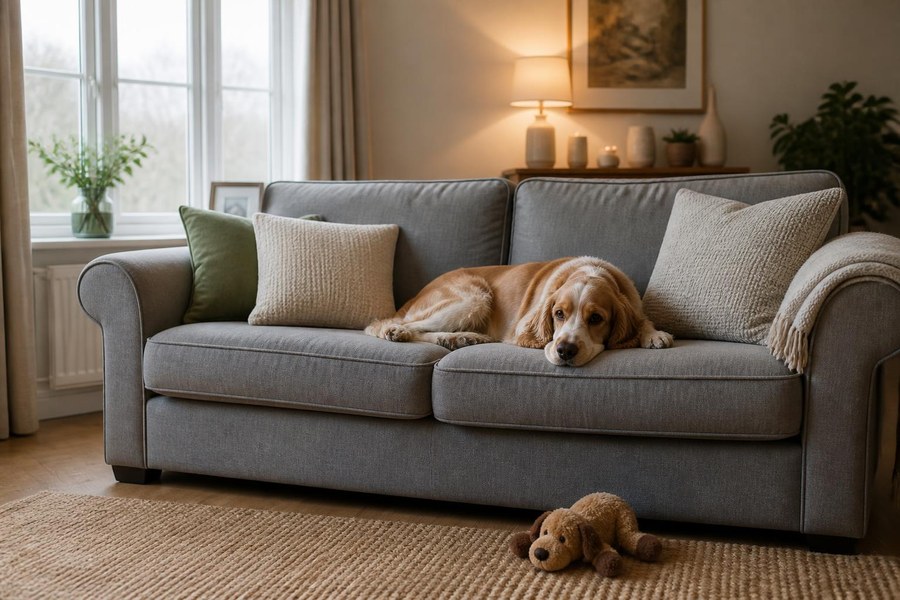
A dog who has very little novelty in their day may start sleeping more, showing less interest in toys, greeting people half heartedly, or wandering around as if they are not sure what to do.
This can be especially easy to miss in older dogs or naturally calm breeds because the behaviour does not disrupt the household.
Extra sleep is not always a problem. Dogs need rest, and many adult dogs sleep for a large part of the day. What matters is whether your dog still has moments of interest, engagement and enjoyment when the opportunity is there.
Ask yourself:
If the change is sudden or your dog seems unwell, take a trip to the vet. Low energy can be linked to pain, illness, age related changes or emotional stress.
If your dog seems generally well but under engaged, start gently. Add one new activity at a time rather than transforming the whole routine overnight. A different walking route, a few minutes of scent work, a new toy texture, or a calm feeding activity may be enough to make the day feel more interesting.
If low mood appears alongside clinginess, shaking, hiding, toileting changes or distress when left, read up on the signs of anxiety in dogs and consider professional support.
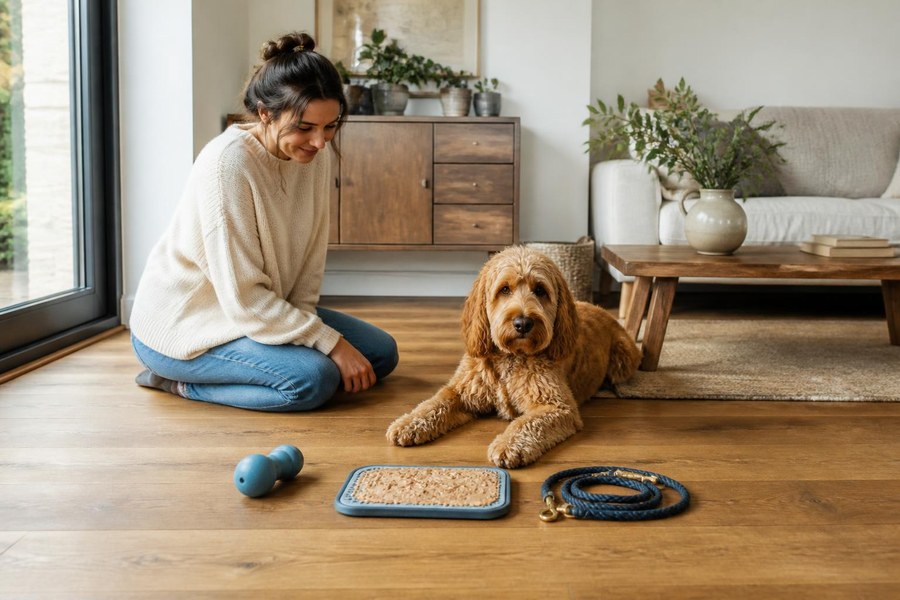
Keeping a dog happy is not about exhausting them. A dog who is physically tired but mentally frustrated can still be restless, noisy or destructive. A better routine balances movement, sniffing, problem solving, chewing, social contact and proper rest.
Start with the basics.
A walk does not have to be long to be useful. Many dogs get more from a slower walk with sniffing time than from a rushed route where they are pulled past every interesting smell.
Try changing one part of the walk:
A reliable Dog Lead and a comfortable Dog Harness can make sniff walks easier to manage, especially for dogs who get excited outdoors.
Food can be more than a bowl placed on the floor. If your dog is healthy and their diet allows it, you can use part of their daily food for simple enrichment.
Options include:
Keep it safe and simple. Avoid hard food puzzles that frustrate your dog, and supervise anything that could be chewed or swallowed.
If every toy is available all the time, none of them feel new. Keep a few out and put the rest away. Swap them every few days.
Think about toy jobs:
Chewing – Useful for dogs who need a mouth-focused outlet.
Carrying – Helpful for dogs who like to parade or greet with something in their mouth.
Tug – Good for controlled interactive play.
Fetch – Useful for some dogs, but should not be overdone with repetitive high speed chasing.
Problem Solving – Useful for dogs who enjoy working things out.
Some dogs become bored because their day has no structure. Others become unsettled because they are always waiting for the next exciting thing.
Build in calm endings. After a walk, play session or training game, give your dog a predictable settling activity. This might be a chew, a lick mat, a rest cue or simply a quiet place where they are not disturbed.
A happy dog does not need constant entertainment. They need a day that makes sense; chances to move, sniff, think, interact and rest.

Boredom is common, but it should not become a catch all explanation for every behaviour change.
Speak to your vet if your dog:
A qualified behaviour professional can also help if the behaviour is persistent, intense or affecting your dog’s quality of life. This is especially important if you suspect separation related distress, anxiety, fear or compulsive behaviour.
For everyday boredom, the answer is usually a better balance of activity and rest. For something deeper, your dog may need medical checks, behaviour support and a plan tailored to their home life.
The good news is that many bored dogs improve with small, consistent changes. A richer walk, a few minutes of training, a safe chewing outlet, a calm lick activity and a predictable routine can make a real difference.
Start with one change today. Watch your dog’s response, adjust gently, and build from there.