
Bringing a puppy home is exciting, but it can also feel like a lot very quickly. One minute you are choosing a bed and tiny collar, the next you are wondering whether the crying at night is normal, how often they need the toilet, and why they are chewing the table leg instead of the toy you bought for them.
The good news is that raising a puppy does not need to be perfect. It needs to be calm, consistent and safe. If you get the early foundations right, your puppy will learn what to expect from family life and you will feel far more in control.
This guide walks through the practical parts of raising a puppy in the UK; what to prepare before they come home, how to handle the first night, how to build a daily routine, what to do about chewing and teething, when to start walks, and which common mistakes to avoid.
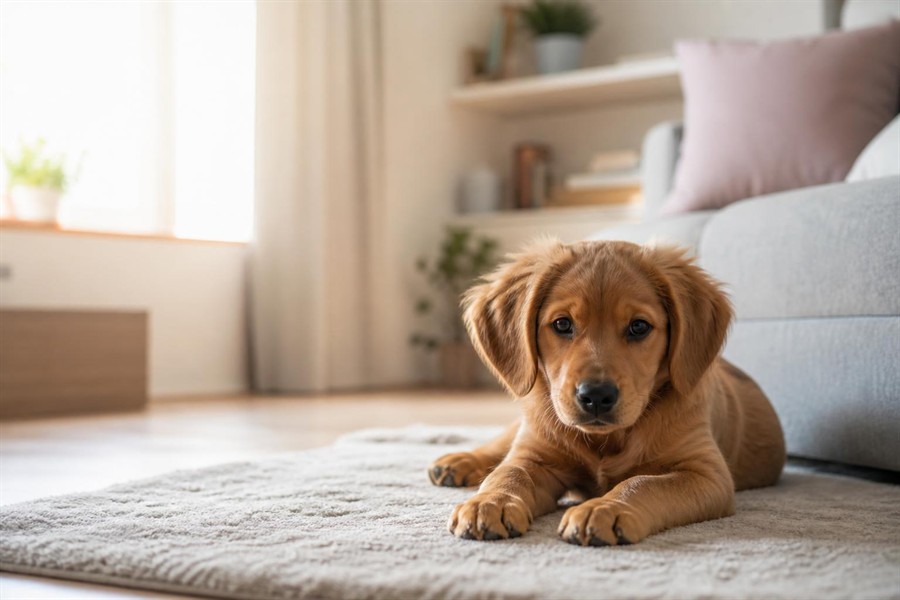
The most important parts of raising a puppy are safety, routine, gentle training, sleep, socialisation, health care and patience.
Your puppy is learning everything from scratch: where to sleep, where to toilet, what they can chew, how to settle, how to be handled, and how to cope with everyday sounds and people.
For the first few weeks, focus less on creating the perfect dog and more on building trust. A puppy that feels safe will learn faster than one that is overwhelmed.
| Priority | What it means in practice |
|---|---|
| Safety | Puppy-proof the home, supervise closely and keep harmful items out of reach. |
| Routine | Keep meals, toilet breaks, sleep and short training sessions predictable. |
| Sleep | Puppies need a lot of rest and can become wild or bitey when overtired. |
| Socialisation | Introduce the world gradually and positively, not all at once. |
| Health | Register with a vet, check vaccination timing, update microchip details and consider insurance. |
| Kit | Choose safe, well-fitting essentials that suit your puppy’s size and stage. |
Think of the first month as a settling in period. There will be accidents, disturbed nights and moments where your puppy seems to forget everything. That is normal. Calm repetition is what turns early chaos into good habits.
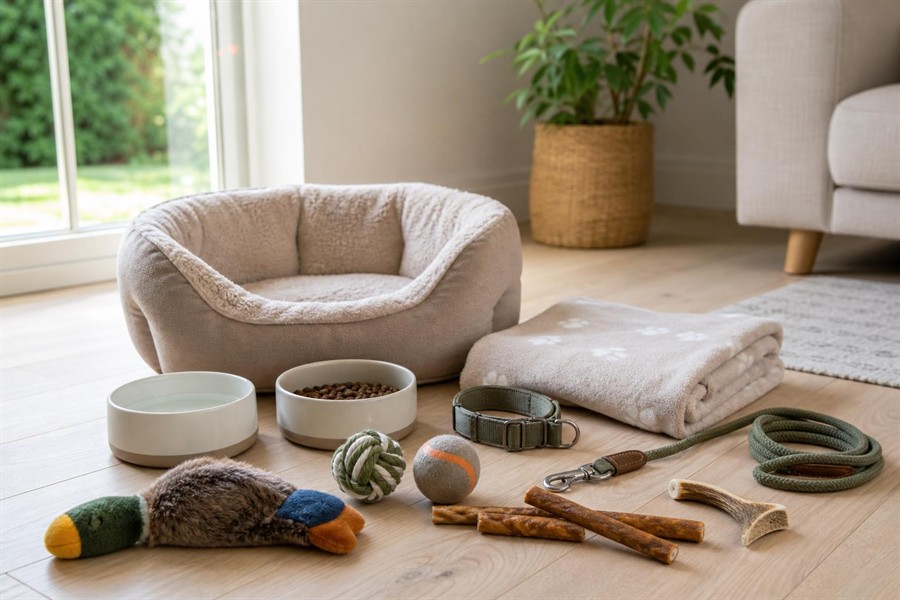
Preparation makes the first week much easier. Before collection day, set up the basics so your puppy comes into a home that already feels organised.
Start with the practical responsibilities. Register with a local vet, ask about out of hours care, check what vaccinations your puppy has already had, and confirm when they can safely go into public spaces.
Puppies should be microchipped by eight weeks old in the UK, but you still need to make sure the chip details are transferred to you and kept up to date.
Next, puppy proof the home. Move electrical cables, shoes, children’s toys, cleaning products, medicines, houseplants and anything fragile out of reach. Use baby gates if you need to limit access. It is much easier to prevent chewing and accidents than to give a young puppy the run of the whole house and then get frustrated when they behave like a puppy.
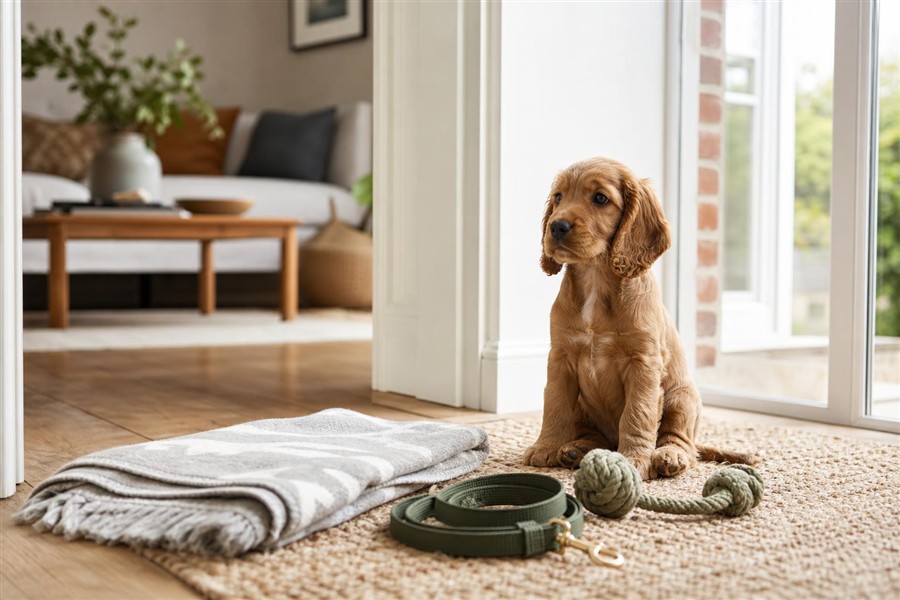
Set up one calm area first, a puppy does not need access to every room. They need water, somewhere comfortable to sleep, a few Dog Toys, easy access to the toilet area and somewhere they can retreat when the house feels busy.
A sensible starter list includes:
Our guide to essential puppy supplies is useful if you want a full list of things you need to buy before bringing a puppy home.
Do not overbuy Dog Clothing or walking kit too early. Puppies grow quickly, so fit matters. A collar or harness that looks right one week may be too tight the next.
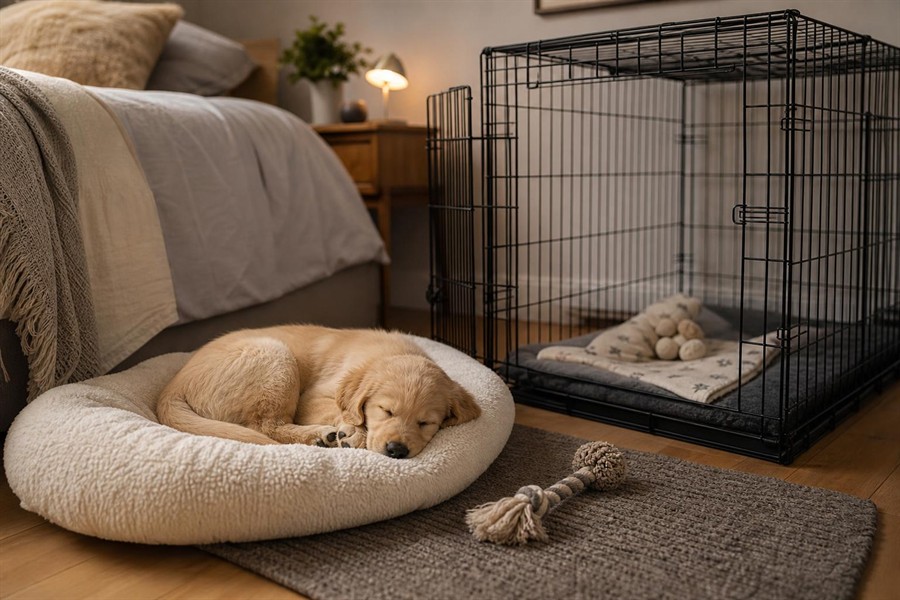
The first day should be quiet. Your puppy has just left familiar smells, littermates and routine, so avoid turning their first day at home into a parade of visitors. Let them explore one safe area, show them where water is, take them to the toilet area often and give them time to sleep.
Keep introductions gentle. If you have children, explain that the puppy needs calm voices, slow movements and space to rest. If you have another dog, manage introductions carefully and do not leave them together unsupervised until you are confident both are relaxed.
The first night is often the hardest part for new owners. Some puppies cry because they are unsettled, need the toilet, feel alone or simply do not yet understand the new routine. That does not mean you are doing something wrong.
A sensible first-night plan is:
Some owners start with the puppy sleeping near their bedroom, then gradually move the bed further away over several nights. Others sleep near the puppy’s planned sleeping area for the first few nights and slowly move away. Both can work. The key is gradual confidence, not leaving a frightened puppy to panic.
For more detail on the early settling period, read our guide to your puppy’s first week at home.
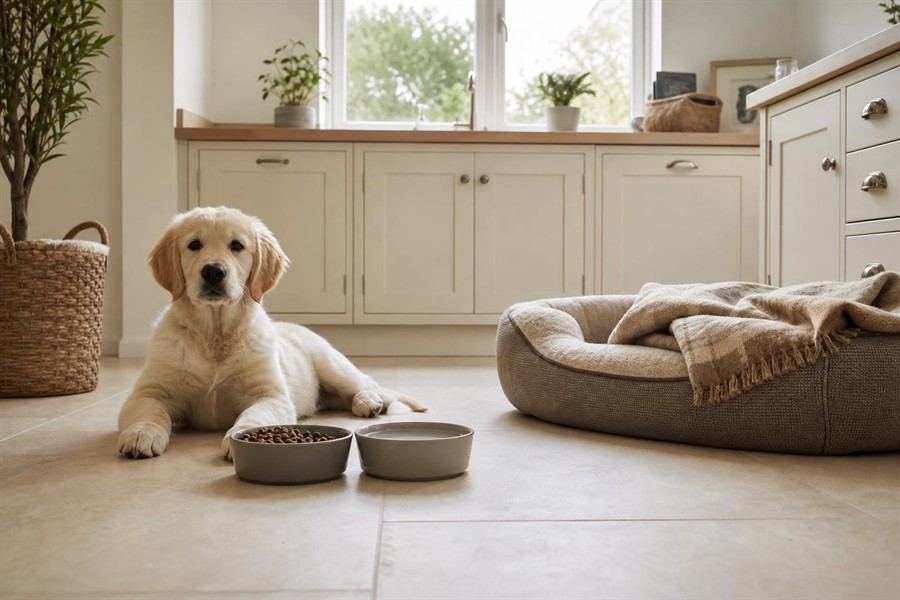
Puppies thrive on routine, but that does not mean your day needs to run like a military schedule. A good puppy routine simply helps them predict what happens next.
In the early weeks, your rhythm will usually repeat around sleep, toilet breaks, meals, short play, gentle training and more sleep. Puppies need far more rest than many new owners expect. If your puppy is suddenly biting, racing around, barking or grabbing clothes, they may be overtired rather than under exercised.
A simple daily rhythm could look like this:
Keep training short. A few minutes of name recognition, recall games, sit, handling practice or lead introduction is enough. End while your puppy is still interested rather than waiting until they are frustrated.
Consistency matters more than intensity. If everyone in the house uses different rules, your puppy will struggle. Decide early whether the puppy is allowed on furniture, where they sleep, how you respond to biting, and which words you use for basic cues.
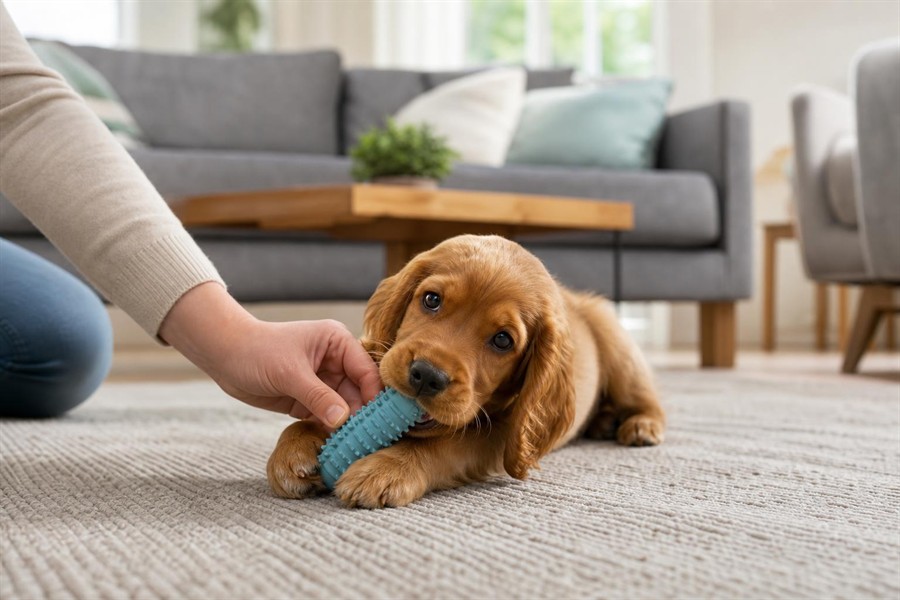
Toilet training is mostly about timing and supervision. Take your puppy out after waking, after eating, after play, before bed and whenever they start sniffing, circling or looking unsettled. Reward them immediately when they toilet in the right place. Do not wait until you are back indoors, because the reward needs to connect with the behaviour.
Accidents will happen. Clean them thoroughly with an enzymatic cleaner so the smell does not encourage repeat accidents. Avoid punishment. If a puppy is told off after an accident, they may simply learn to hide when they need to go.
Chewing is also normal. Puppies explore with their mouths, and teething can make chewing more intense. The answer is not to stop all chewing, it is to redirect chewing onto safe items.
Keep a few suitable teething toys within reach and rotate them so they stay interesting. If your puppy grabs shoes, furniture or sleeves, calmly swap the item for something appropriate.
Useful outlets include:
If biting becomes hard, frantic or difficult to interrupt, look at sleep first. Many puppies bite more when they need rest.
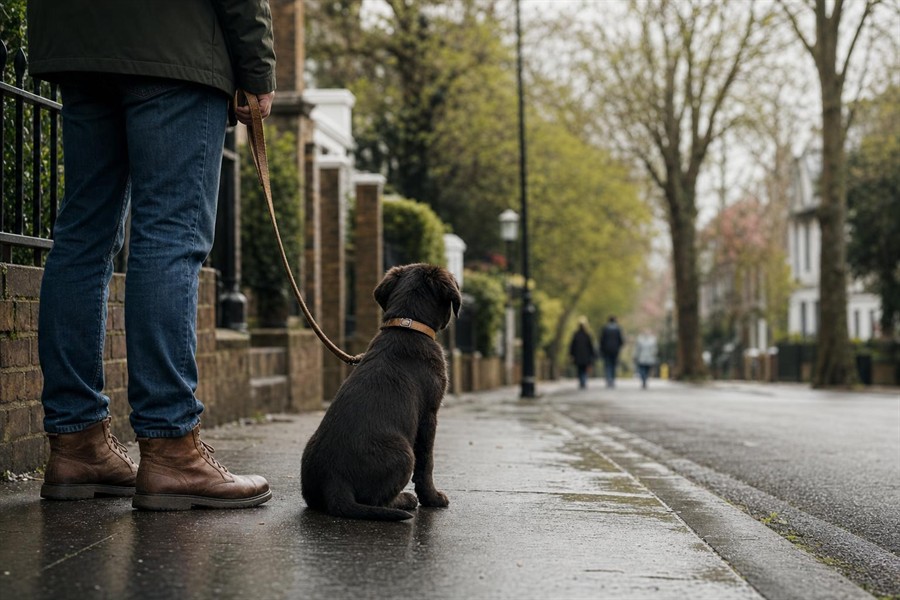
Socialisation does not mean letting every person and dog crowd your puppy. It means helping your puppy have positive, manageable experiences with the world they will live in.
Before public walks are allowed, your vet can advise what is safe locally. You may still be able to carry your puppy outside, let them hear traffic from a distance, watch people, experience household sounds, meet calm visitors, walk on different safe surfaces at home, and become comfortable with gentle handling.
Good socialisation should feel calm. If your puppy is trembling, hiding, barking repeatedly, freezing or trying to escape, the experience is too much. Move further away, reduce the pressure and let them recover.
Useful early experiences include:
Being alone also needs gradual practice. Start with tiny moments: your puppy behind a baby gate while you step away briefly, or resting with a safe chew while you move around the room. Build slowly. A puppy that is distressed when left needs support, not a longer absence to get used to it.
If you are worried, our guide on signs of anxiety in dogs can help you spot when normal settling in nerves may need more care and attention.
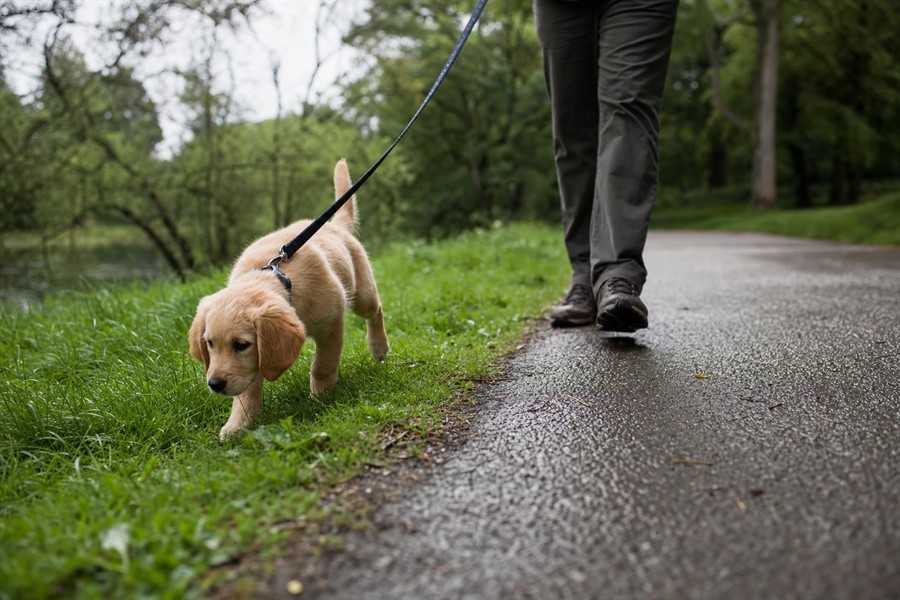
Your vet should confirm when your puppy can safely go for walks in public areas after vaccinations. Until then, do not rush into parks or busy dog areas. You can still build confidence through safe exposure, garden play and short carried outings where appropriate.
For walks, your puppy will need a collar and ID tag. In the UK, dogs in public places should wear identification with the owner’s name and address. Many owners also add a phone number. Choose Dog Collars that are light, secure and correctly fitted.
You will also need a lead. A simple, reliable lead is usually better than something complicated for early training. Bark Boutique’s Dog Leads are most useful when chosen for control, comfort and your puppy’s size.
Harnesses can be helpful for some puppies, especially when they are learning to walk without pulling, but fit is important. A poorly fitted harness can rub, restrict movement or encourage awkward walking. If you are unsure, read our guide, harnesses vs collars for puppies.
Keep early walks short and positive. Your puppy is not training for a hike, they are learning that the outside world is safe and interesting. Let them sniff, pause and observe. If they seem overwhelmed, go home and try a quieter route next time.
British weather matters too. Small, short coated or very young puppies may feel the cold more quickly, especially in winter rain and wind. You may need to adapt routines to keep dogs safe in all seasons.
Our guide on do dogs need coats explains when a coat is practical rather than decorative. If you do buy clothing or a harness, check fit regularly and learn how to measure your dog for clothing because their size can change fast.
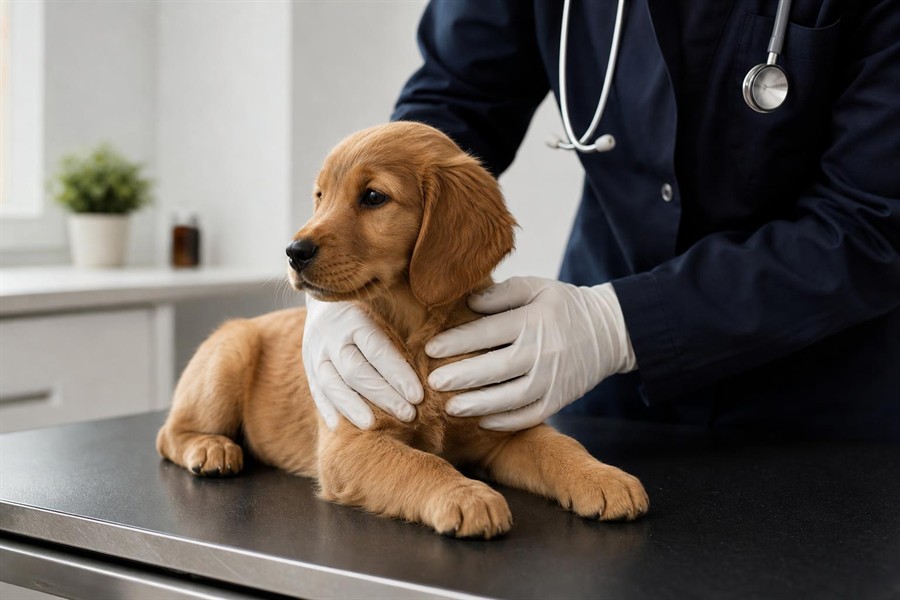
A good relationship with your vet is one of the most useful things you can set up early. Ask about vaccinations, worming, flea treatment, diet, neutering advice, dental care and what to do in an emergency.
Avoid changing food suddenly unless your vet advises it. If you want to move to a different diet, do it gradually to reduce stomach upsets. Puppies also need food suitable for their age and expected adult size, so check with your vet if you are unsure.
Watch for signs that need veterinary advice, such as repeated vomiting, diarrhoea, not eating, extreme tiredness, coughing, difficulty breathing, limping, persistent scratching, swollen eyes, sudden behaviour change or anything that feels wrong. Puppies can become unwell quickly, so it is better to ask early.
Responsible ownership also means thinking about where your puppy comes from. Adoption is worth considering, and if you buy from a breeder, choose carefully. Avoid rushed purchases, sellers who will not let you see the puppy with their mother, poor conditions, missing paperwork or pressure to pay quickly.
Insurance is not exciting, but it can matter. Veterinary treatment can become expensive without warning, so compare policies before you need one.
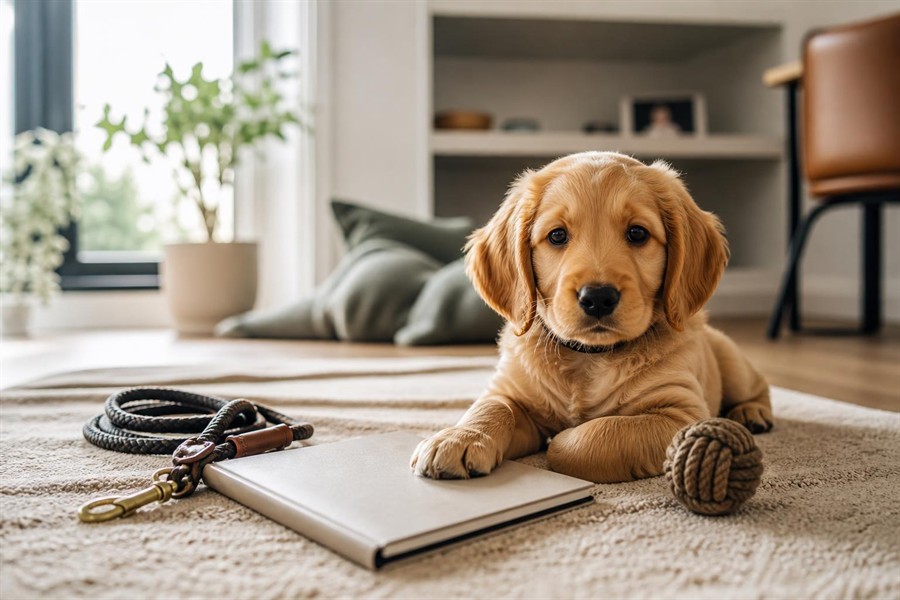
The first month is easier when you know what each stage is for. Do not treat this as a strict timetable, puppies mature at different speeds. Use it as a guide for what to focus on next.
| Stage | Main focus | What to avoid |
|---|---|---|
| Days 1 to 3 | Safety, sleep, toilet trips and calm bonding | Too many visitors, too much freedom, busy outings |
| Week 1 | Routine, house rules, gentle handling and settling | Long training sessions or expecting adult behaviour |
| Weeks 2 to 3 | Confidence, short training games and positive exposure | Overwhelming socialisation or forced dog greetings |
| Week 4 onwards | Gradual independence, first walks when vet approved and stronger habits | Rushing progress because another puppy seems ahead |
If your puppy struggles at any point, step back rather than pushing through. More rest, more supervision and a simpler routine solve many early problems.
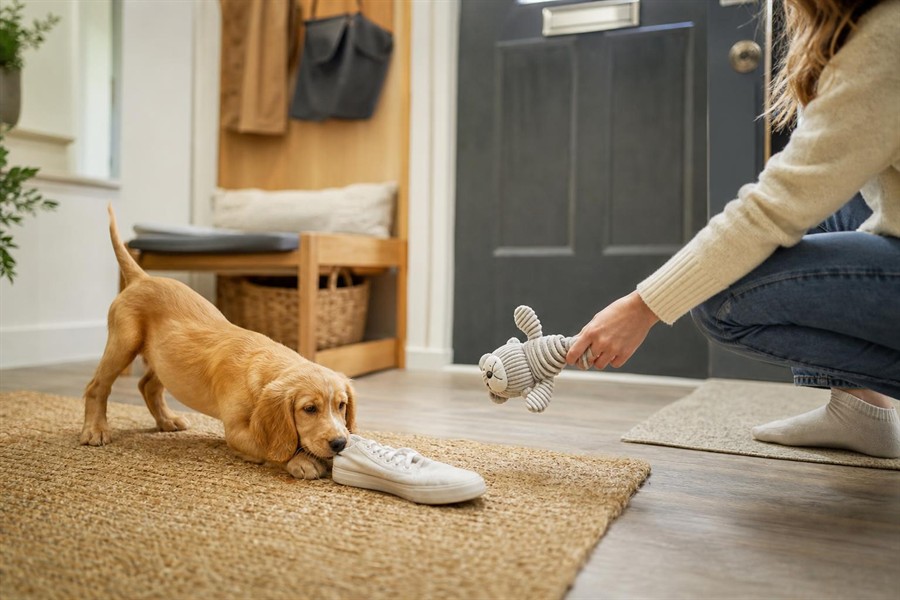
Most puppy mistakes come from rushing. Owners often give too much freedom too soon, expect adult behaviour too early, or try to fix everything in one week.
The first common mistake is waiting for accidents instead of preventing them. Puppies need frequent toilet opportunities. If they have been awake, playing, eating or drinking, assume they may need to go out.
The second is over exercising. Long walks can be too much for a growing puppy, and busy environments can overwhelm them. Short, positive experiences are better than exhausting ones.
The third is using punishment. Shouting, grabbing, tapping noses or forcing a puppy into a crate damages trust and rarely teaches the lesson you intended. Reward the behaviour you want, manage the environment and redirect calmly.
The fourth is using a crate badly. A crate can be a safe resting space, but it should never be a punishment or a place where a distressed puppy is shut away for long periods. Introduce it gradually and positively.
The fifth is buying kit for looks before fit. A collar, coat or harness must suit your puppy’s body and movement. Premium should mean comfortable, practical and well chosen, not just attractive.
Finally, do not compare your puppy too much with other people’s dogs. Some settle quickly. Some take longer. Some are confident outside but struggle alone. Others sleep well but chew everything. Look at the puppy in front of you and adjust calmly.

Not if they are distressed. A new puppy may cry because they need the toilet, feel alone or are frightened. Keep the first nights calm and supportive. You can gradually build independence once they feel secure.
Ask your vet, because it depends on vaccination timing and local disease risk. Until public walks are safe, you can still build confidence through safe home experiences, garden time and carried exposure where suitable.
Very young puppies should not be left for long. Start with tiny absences and build gradually. If your puppy panics, cries continuously or becomes destructive when alone, slow down and ask a vet or qualified behaviour professional for advice.
It can be, if introduced positively. A crate should be a safe, comfortable den where your puppy can rest. It should not be used for punishment or long periods of confinement.
Redirect to safe toys, keep play calm, reward gentle behaviour and make sure your puppy is getting enough sleep. Overtired puppies often bite more.
Some do. Small breeds, short-coated puppies, very young puppies and dogs out in cold wet weather may benefit from practical warmth. Fit and comfort matter more than style.
Start with food, bowls, bed, safe toys, cleaning supplies, collar, ID tag, lead and any vet advised essentials. Add extras once you understand your puppy’s size, temperament and routine.
Raising a puppy is not about getting everything right from day one. It is about making your puppy feel safe, teaching small habits consistently and adjusting as they grow.
Prepare the home, keep the first few days calm, build a simple routine, reward the behaviour you want and ask your vet when health or vaccination questions come up. The early weeks can be tiring, but they are also where trust is built.
If you want the practical starter items in one place, Bark Boutique’s puppy welcome packs are designed to make those first preparations simpler. For day by day settling advice, read our guide to your puppy’s first week at home.