
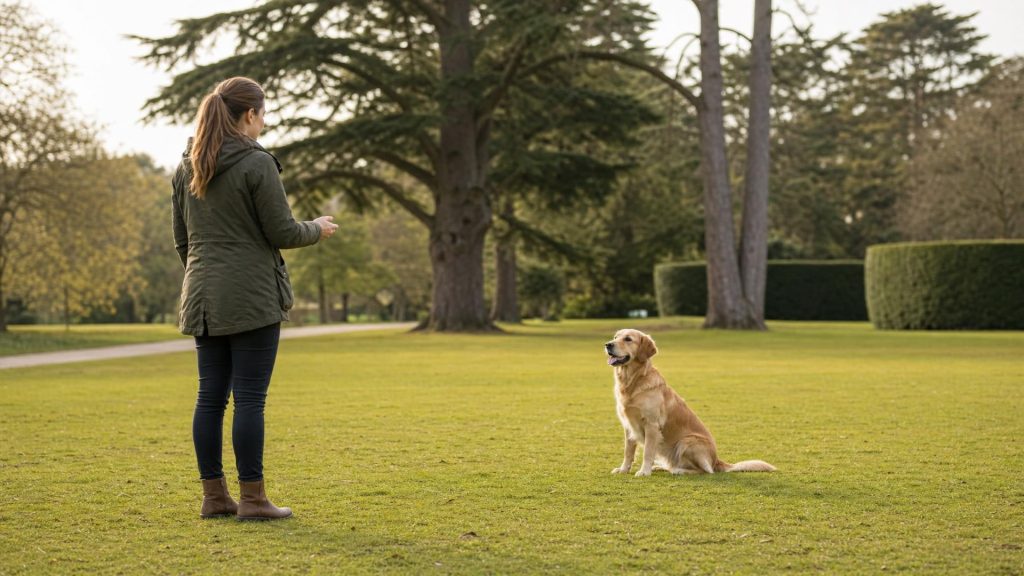
Training is one of the most rewarding parts of sharing your life with a dog.
Whether you have just welcomed a playful puppy into your home, adopted a rescue dog, or are looking to improve your dog’s manners, effective training helps build trust, confidence, and clear communication between you and your dog.
The right approach helps with recall, walks, visitors, chewing, barking and all the small moments that can turn messy without clear guidance.
This guide explains how dogs learn, which commands to teach first, how to build reliable habits and when it is time to get professional help.
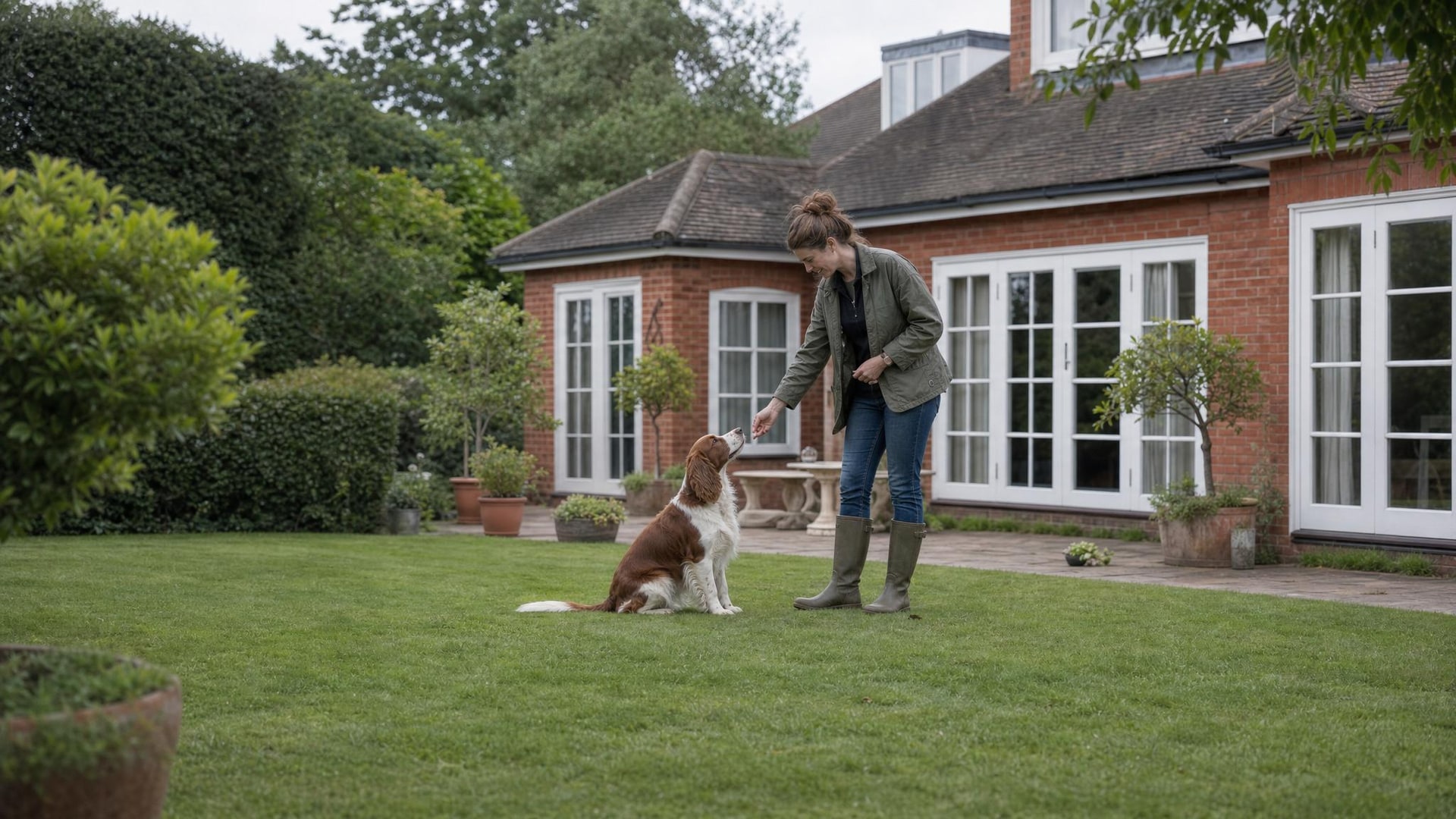
Dogs learn through rewards. When a behaviour leads to something enjoyable, valuable, or rewarding, they are more likely to repeat it.
Over time, these repeated behaviours become habits. By consistently rewarding the behaviours you want to encourage and ignoring or redirecting unwanted behaviours, you can help your dog develop positive habits and make training both effective and enjoyable.
Timing, patience and repetition are what turn the command into something your dog can actually understand.
Positive reinforcement means rewarding the behaviour you want to see again. This reflects the RSPCA’s reward based dog training advice, which focuses on patience, short sessions and rewards your dog values.
The reward needs to arrive at the right moment. If your dog comes back when called, reward them when they reach you. If they sit, reward while they are still sitting. Late rewards make the lesson harder to understand.
This kind of training also builds confidence. A dog who knows how to earn good outcomes is more likely to try, engage and recover from mistakes.
Mixed signals slow dogs down.
If jumping up gets attention from one person but is discouraged by another, the behaviour still works often enough to keep happening. From the dog’s point of view, it is not a rule. It is a gamble that sometimes pays.
Agree the household rules. Use the same cues. Reward the same behaviours. If everyone handles the basics in the same way, your dog has a much clearer path.
Food rewards are popular for a reason. They are quick, clear and easy to repeat.
They are not the only option.
Some dogs work for a toy. Others care more about praise, play, sniffing or being released to explore. The right reward depends on the dog and the environment. A quiet kitchen and a busy park are not the same challenge.
Dogs do not all learn at the same speed. Breed can influence energy, focus, chase drive and independence. Age matters as well.
Puppies have short attention spans. Adolescent dogs can be impulsive. Adult dogs may bring old habits. Senior dogs may need gentler sessions.
The answer is not to lower standards forever.
It is to build the route in smaller steps, then raise the difficulty when your dog is genuinely ready for it.
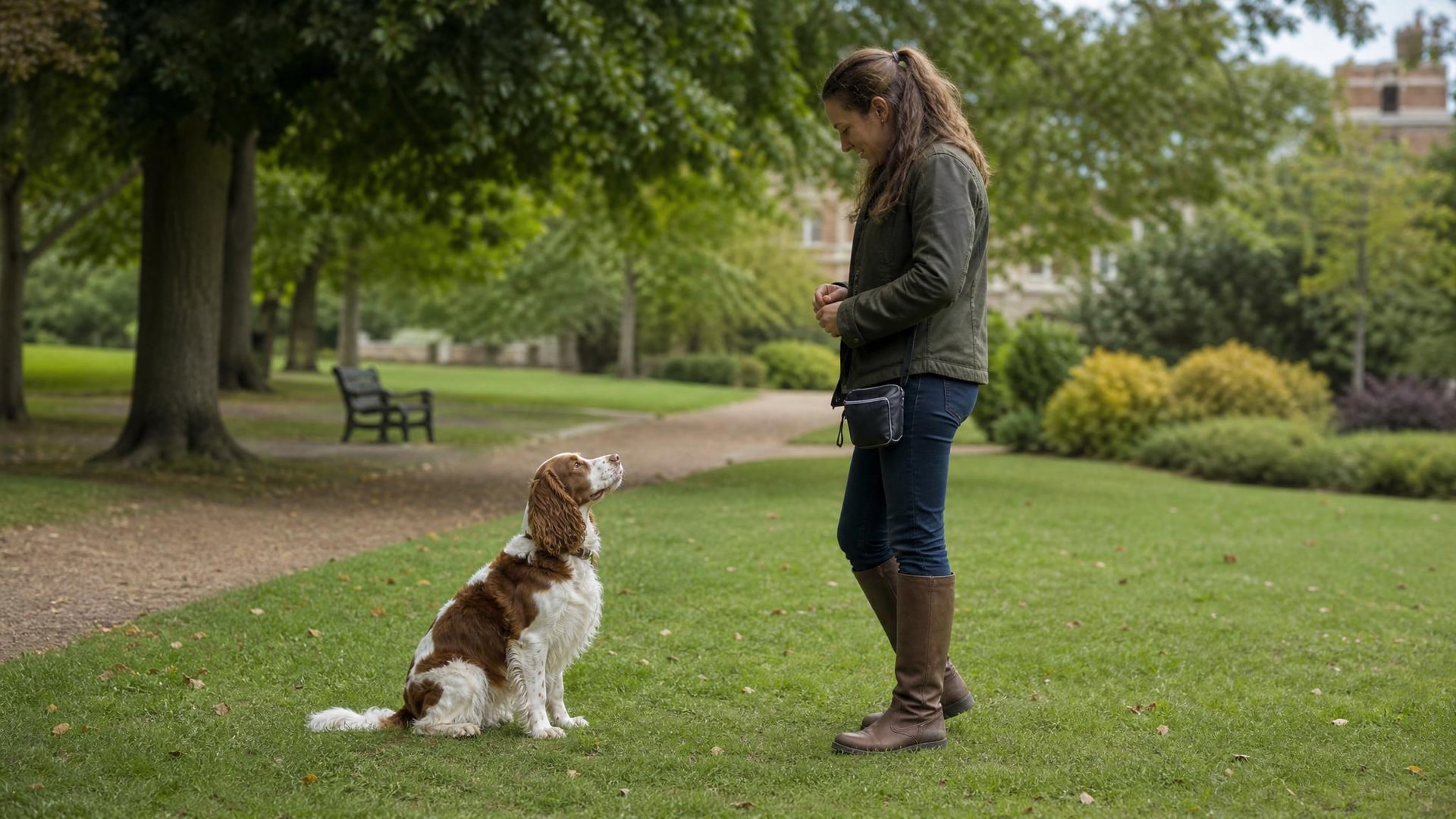
Training can begin as soon as your dog comes home.
The important part is choosing the right kind of training for their age, confidence and current emotional state. A settled dog can learn. An overwhelmed dog usually needs support first.
Puppy training starts with routine. Toilet habits, name response, gentle handling, safe chewing, sleep and calm separation all matter before formal obedience becomes the focus.
Keep it light. A puppy who has just arrived home is already learning a huge amount. If those first few days feel unsettled, it is worth slowing down and getting the basics of the first week at home right before expecting too much.
Adolescence can make a trained dog look suddenly untrained.
Recall may weaken. Pulling may increase. Focus can disappear outdoors, especially when the environment is more interesting than you are.
This stage needs calm repetition, not panic. Go back to easier versions of the skill and reward heavily for the behaviour you want.
It helps to treat this stage as a proofing period rather than a disaster. The dog may know the cue, but they do not yet know it well enough around bigger distractions, stronger impulses and more independence.
Adult dogs can learn new behaviours. They may need more time if unwanted habits have been practised for years, but progress is still possible.
Start with the behaviours that would make daily life better: recall, loose lead walking, calm greetings, settle and leave it.
Work out what the dog has already learnt, not just what you wish they knew. If pulling, jumping or barking has been successful for years, the new behaviour needs enough reward history to compete with the old one.
Older dogs can learn. Sessions may need to be shorter, and you may need to consider stiffness, hearing, eyesight or lower stamina.
For senior dogs, training should support comfort as much as behaviour. If age is starting to affect your dog’s routine, it helps to think about the wider care needs that come with later life as well as training.
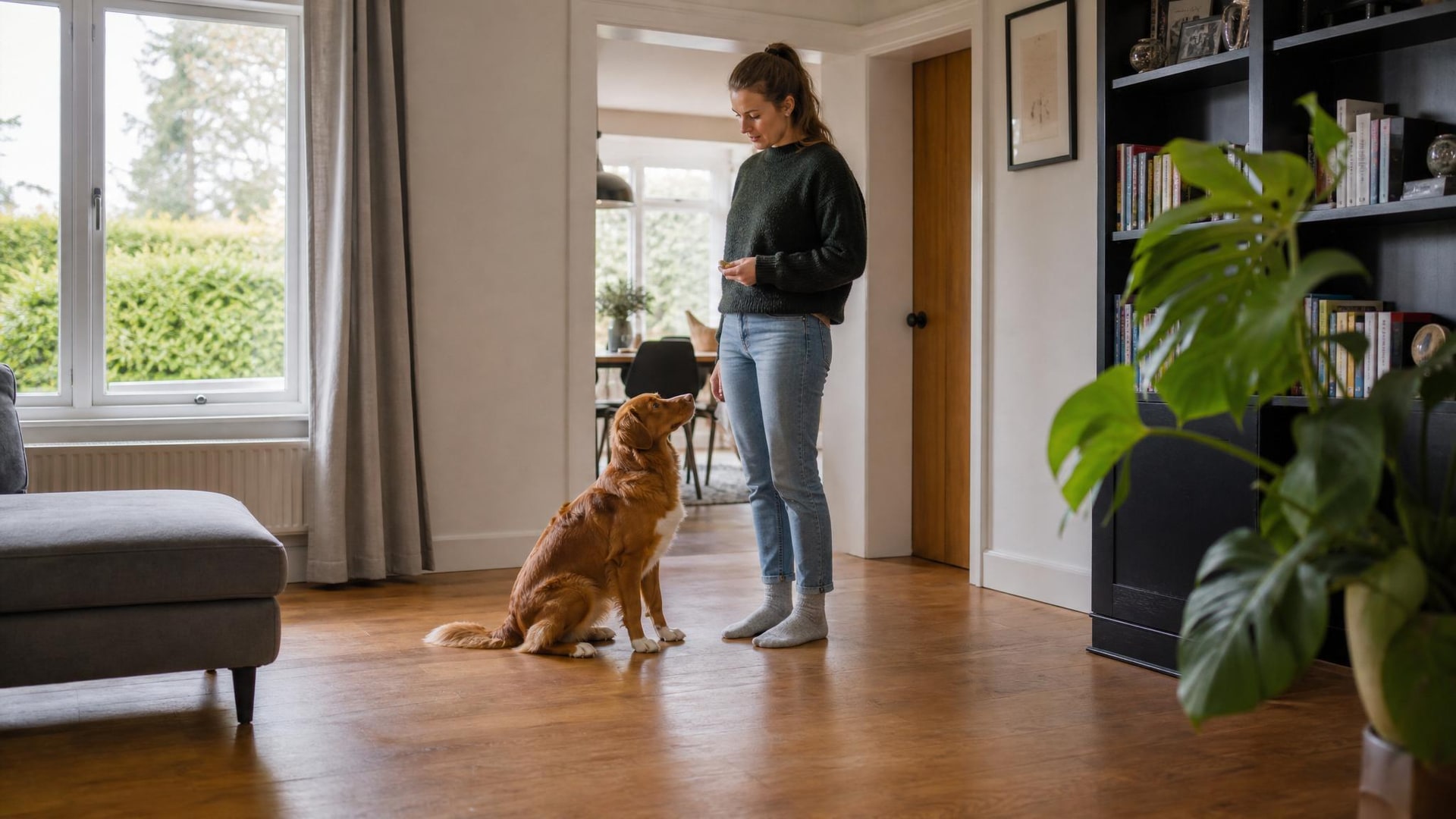
You do not need a cupboard full of kit.
Equipment should make training safer and clearer, not replace the training itself. The right setup removes friction. It does not do the teaching for you.
A standard lead is useful for everyday walks.
A longer lead is better for recall practice in safe open spaces, because it gives your dog room to move without giving up control completely.
If the lead is uncomfortable to hold, too short for training or awkward to manage, walks become harder than they need to be. A practical walking setup starts with a lead that gives you steady control without getting in the way.
A well fitted Dog Harness can help with safe control, particularly while loose lead walking is still being taught. It should sit securely without rubbing, twisting or limiting shoulder movement.
The harness will not teach the skill for you. It simply makes practice more comfortable. If your current setup is making pulling worse, look for a harness that lets your dog move naturally while you train.
Treats are not a bribe when they are used properly. They are information. They tell your dog, clearly and quickly, which behaviour worked.
Use small pieces that your dog can eat fast. A reward that takes ten seconds to chew breaks the flow of the session. Soft, pea sized pieces usually work better than large biscuits, especially when you are repeating a skill several times.
The value of the treat should match the difficulty of the task. Kibble may be enough in the kitchen. It probably will not compete with squirrels, other dogs or an exciting new park. Save higher value rewards for harder environments, recall practice and moments where your dog has made a genuinely good choice.
Over time, treats should become part of a wider reward system. Praise, play, sniffing, a toy, being released to explore and access to something your dog wants can all become rewards. Food simply gives you the clearest starting point.
A long lead is one of the most useful tools for recall training, but it needs to be used carefully. It gives your dog room to move while still giving you a safety backup if they make the wrong choice.
Use a long lead in open spaces away from roads, livestock and crowded paths. Let it trail or hold it loosely so your dog can move naturally. Avoid wrapping it around your hand, as a sudden pull can cause injury.
The aim is not to reel your dog in every time. The aim is to practise recall with enough freedom for the lesson to be realistic, but not so much freedom that failure becomes dangerous.
A clicker marks the exact moment your dog gets something right. Marker words, such as “yes”or “good boy/girl” can do the same job if you use it consistently.
The marker is not the reward. It is the signal that the reward is coming. This is useful when the behaviour happens quickly, such as eye contact, a loose lead moment or your dog choosing to move away from something tempting.
If you use a marker, keep it clean. Say the word once, then reward. If the word gets used casually all day, it loses precision.
A treat pouch sounds minor, but it can improve your timing. If rewards are buried in a coat pocket, you may miss the moment your dog actually made the right choice.
Choose something easy to open, easy to clean and comfortable to wear. The point is not to look like a professional trainer. The point is to have rewards ready when your dog gives you something worth reinforcing.
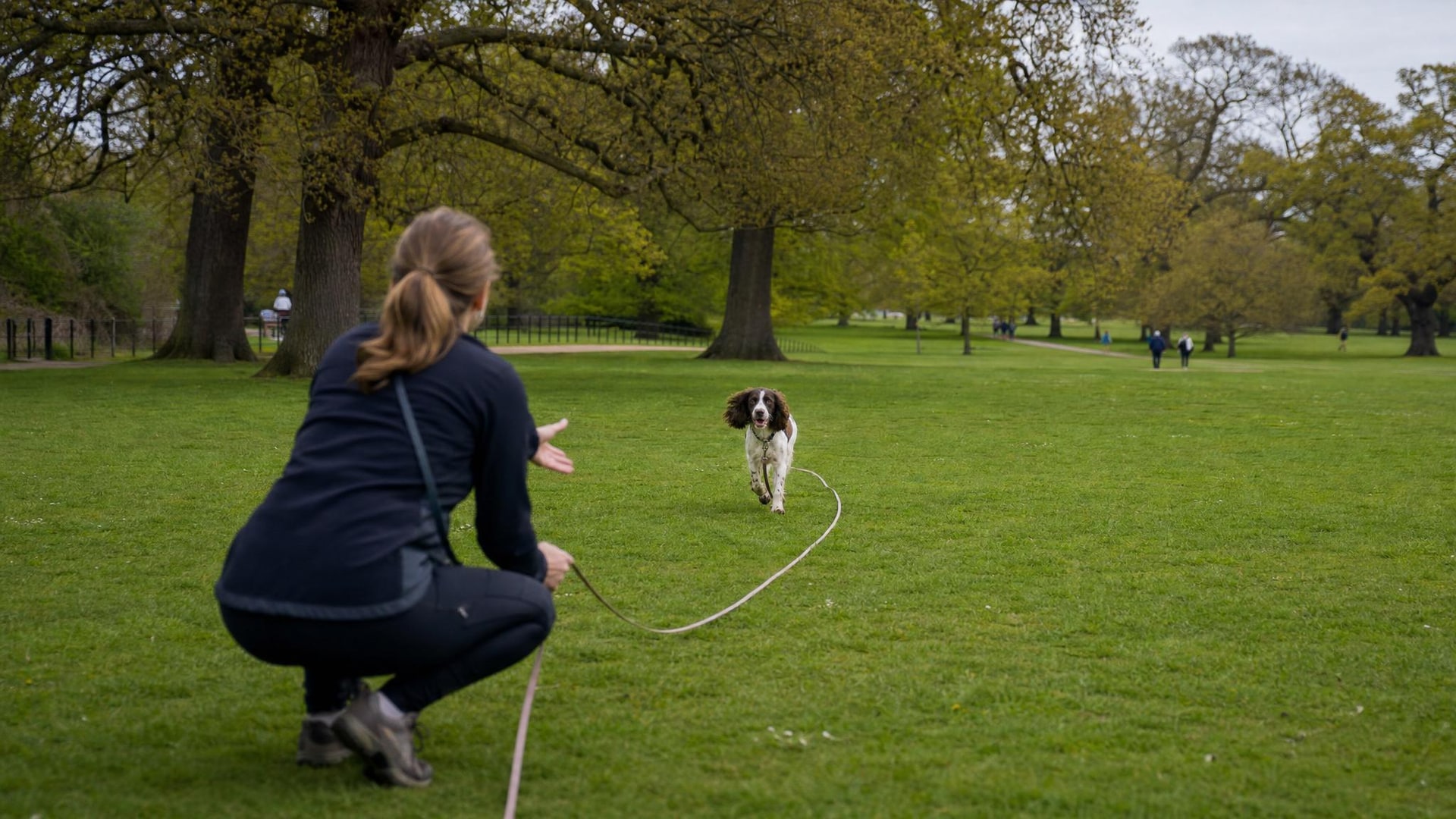
The first commands should be useful in real life. Tricks are fun, but foundation skills are what help at doors, on walks, around food, with visitors and during everyday routines.
Start with a small set of behaviours and practise them in easy places first. A command that works in the kitchen may fall apart outside a school gate or near another dog. That does not mean your dog is being stubborn. It usually means the situation is harder than the version they have practised.
| Command | Why it matters | How to start | When to make it harder |
|---|---|---|---|
| Sit | Useful for greetings, doors, food bowls and short pauses | Lure gently with food, reward as soon as your dog sits | When your dog responds without seeing the treat first |
| Stay | Builds patience and helps your dog hold position | Reward one second of stillness, then release clearly | Add a little more time before adding distance |
| Leave it | Helps around dropped food, unsafe items and distractions | Reward your dog for turning away from a low value item | Use more tempting items only when the easy version is reliable |
| Drop it | Makes toy play safer and helps with stolen objects | Swap for something better, then sometimes give the item back | Practise with different toys and low pressure household items |
| Come | Protects your dog and gives them safer freedom | Call once, move away happily, reward when they reach you | Increase distance and distractions gradually |
| Bed | Gives your dog a calm place during meals, visitors and busy moments | Reward them for going to the bed, then for staying there briefly | Build duration only once your dog understands the place |
Sit is often the first command owners teach, and for good reason. It gives your dog a simple behaviour to offer when they want something; food, attention, a door opening, a toy or a greeting for example.
Start by luring your dog’s nose slightly up and back with a treat. As their bottom touches the floor, mark the behaviour and reward. Once they understand the movement, add the word “sit” just before they do it.
Do not keep repeating the cue. If your dog does not sit, help them with the lure again or make the environment easier. Repeating “sit, sit, sit” teaches them that the first word does not matter.
Stay teaches your dog to hold a position until released. The mistake many owners make is asking for too much too soon. They ask for ten seconds, step away and add distractions all at once.
Build it in layers. First reward one second of stillness. Then two. Then a small hand movement. Then one tiny step back. Your release word matters too. It tells your dog when the behaviour is finished, so they are not left guessing.
If your dog keeps breaking the stay, the task is too hard. Reduce the time or distance and rebuild from there.
Down is useful because it encourages a more settled body position. It can help in cafes, at home, during visitors and when your dog needs to relax rather than hover.
Some dogs find down harder than sit because it feels more vulnerable. Practise on a comfortable surface and avoid pushing your dog into position. Lure slowly from the nose down towards the floor, then slightly forward. Reward as soon as elbows touch the ground.
Leave it is a safety skill. It can stop your dog picking up dropped food, sharp objects, medication, wildlife or something unpleasant on a walk.
Begin with something low value. Let your dog notice it, then reward the moment they move away from it or look back at you. You are teaching disengagement, not a battle of strength.
Only increase the difficulty when your dog can succeed easily. If you jump straight to high value food on the floor, the lesson becomes unfair.
Drop it is different from leave it. Leave it means do not take that. Drop it means release what is already in your mouth.
The safest way to teach it is through swaps. Offer something better, mark the release, then reward. With toys, give the toy back sometimes. If dropping always means losing the fun, your dog may learn to run away instead.
Good tug games are useful here. They teach your dog that letting go does not end the relationship or the game. It simply becomes part of play.
Wait is a short pause. It is useful at doors, kerbs, car boots and food bowls. Unlike stay, it does not need to mean “hold this position for a long time”. It simply asks your dog to pause until released.
Start with easy moments. Ask for a brief wait before putting the bowl down or opening a door. Reward the pause, then release clearly. If your dog surges forward, close the door or lift the bowl calmly and reset.
Come should always feel worth responding to. Use a cheerful tone, reward well and avoid calling your dog only when the fun ends.
Practise when your dog is likely to succeed. Call them from a few steps away, reward, then let them go back to what they were doing. That teaches them that coming back does not always mean being clipped on the lead or taken home.
Bed gives your dog a clear place to settle. This is useful during meals, when visitors arrive, while you are cooking or when your dog needs help switching off.
Reward your dog for going to the bed first. Then reward short moments of staying there. Build duration gradually. If you expect a full hour before your dog understands the behaviour, frustration is almost guaranteed.
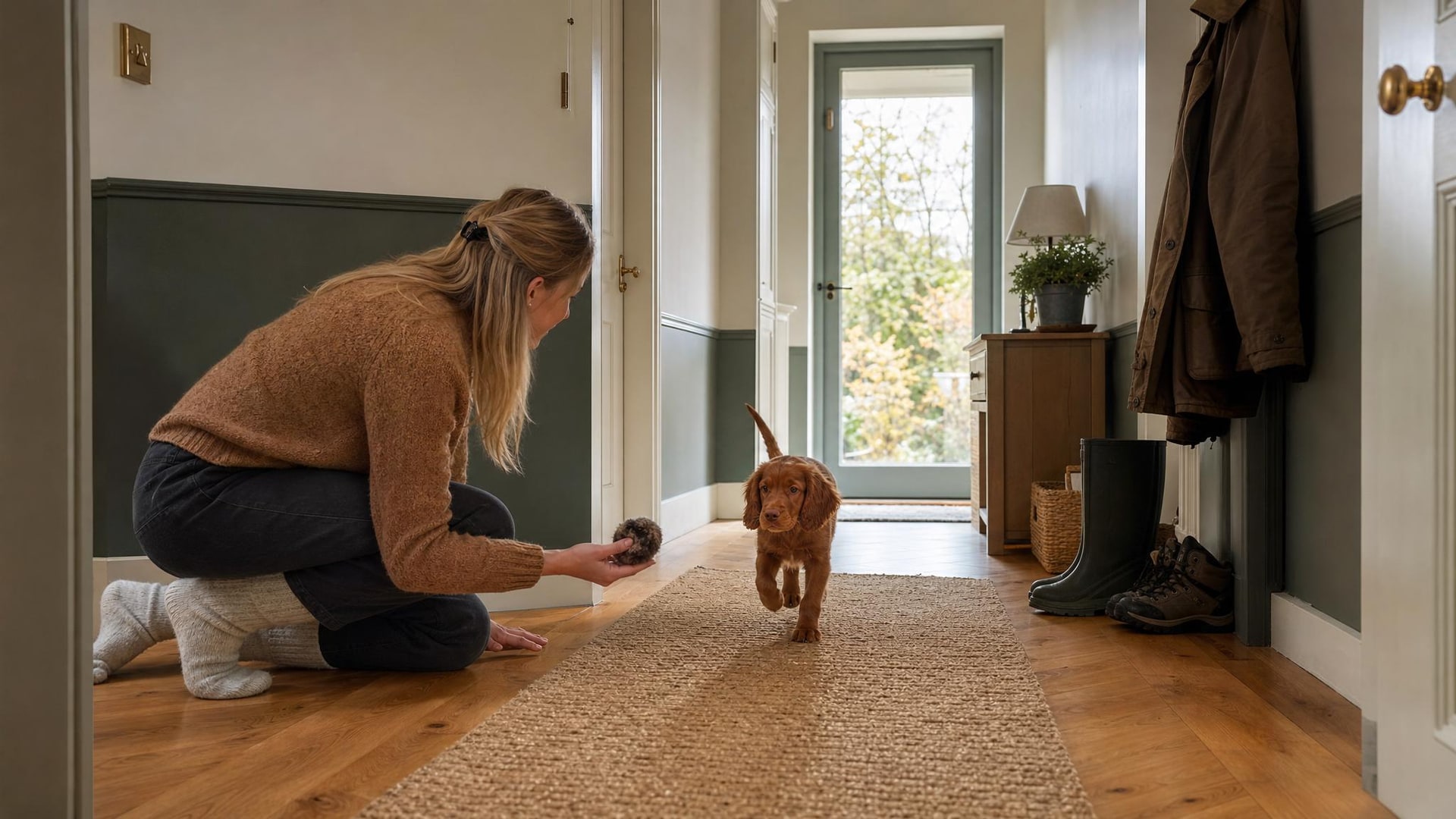
Recall is one of the most important skills your dog can learn. It protects them from roads, livestock, unknown dogs, people who do not want to be approached and situations that can change quickly.
It also gives your dog more freedom. A dog with a reliable recall can enjoy safer off lead time where it is appropriate. A dog without one often has to stay restricted because the risk is too high.
Recall fails when the dog has learnt that ignoring you is more rewarding than coming back. This often happens by accident. The dog is called, they ignore it, and nothing changes. Or they come back and the walk immediately ends.
From the dog’s point of view, recall may start to mean “stop doing the fun thing”. That is why the reward history matters so much.
Begin indoors or in the garden. Say the cue once, encourage your dog towards you, then reward generously when they arrive. Keep your body language inviting. Moving away from your dog often works better than leaning towards them.
Once the easy version is strong, move to a quiet outdoor space with a long line. Practise short recalls, reward, then release your dog back to sniffing. This teaches them that coming back does not always end their freedom.
Add difficulty slowly. Distance, distractions and excitement should increase one at a time. If your dog cannot respond, go back a step rather than blaming them.
An emergency recall is a special cue for urgent situations. It should use a unique word or sound and an exceptional reward. Do not use it casually every day.
Practise it occasionally in easy settings so it stays strong. When your dog hears that cue, it should predict something unusually good.
Do not poison the emergency cue by using it when you are annoyed or when nothing good follows. It should stay rare, clear and valuable so it cuts through distraction when you genuinely need it.
Do not stand in the park repeating the cue. Every ignored repetition weakens it.
Move closer. Reduce the distraction. Use a better reward. Practise the next repetition somewhere easier. If your dog is regularly ignoring recall, use a long line while you rebuild the habit.
It is also worth checking whether the cue has been overused. If your dog hears the same word repeatedly without consequence, retraining with a fresh cue can sometimes be clearer than trying to repair the old one.
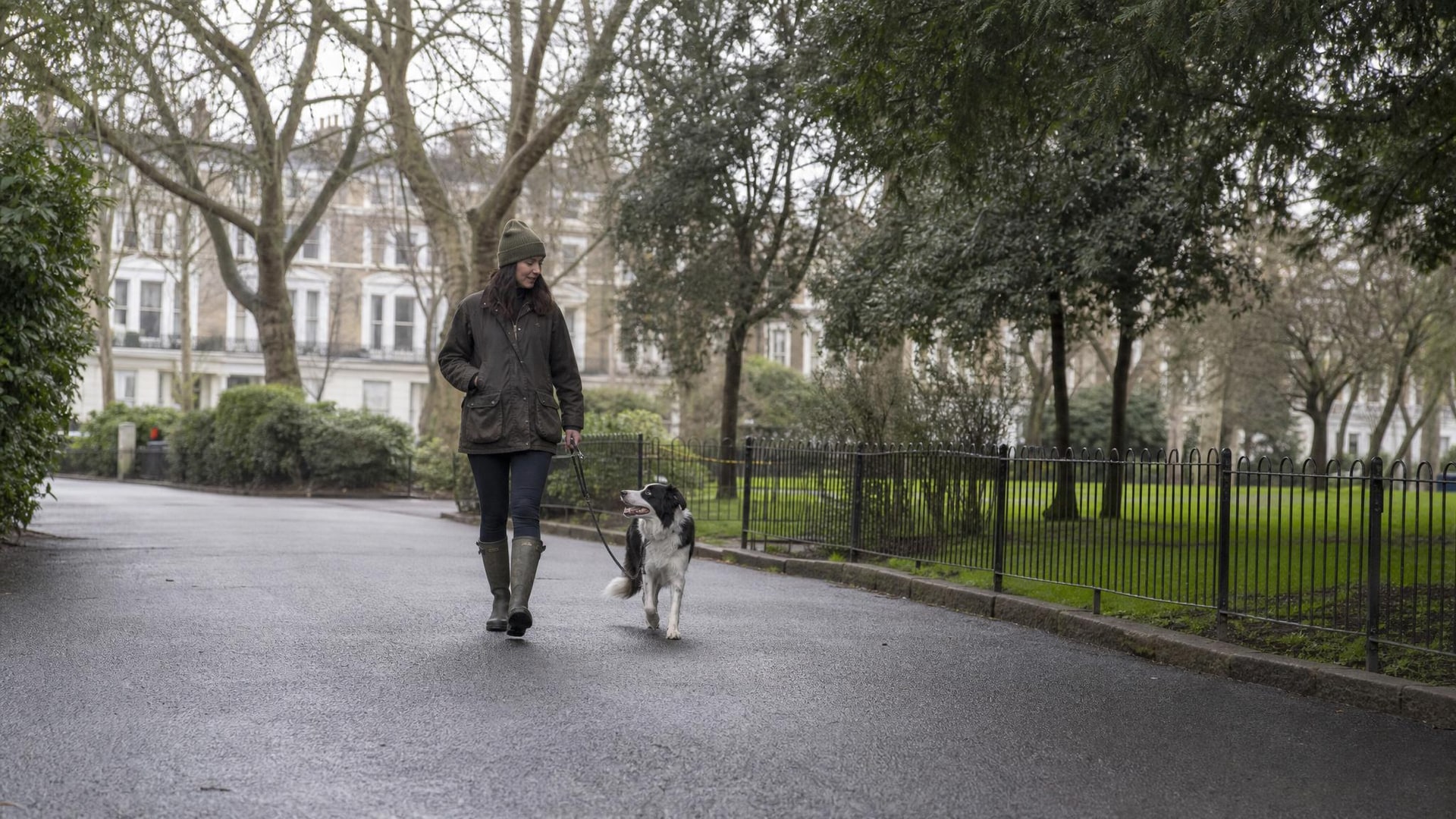
Loose lead walking deserves serious attention because it affects daily life. Pulling can make walks frustrating, uncomfortable and sometimes unsafe, especially with strong dogs or busy pavements.
Dogs do not pull because they are trying to be difficult. They pull because the world is interesting and pulling often gets them where they want to go.
Dogs naturally move faster than people and explore through scent. If pulling gets them to a smell, a person, a dog or a patch of grass, the behaviour has been rewarded.
This is why equipment alone rarely fixes pulling. A harness can make walks safer and more comfortable, but the dog still needs to learn that a loose lead is what moves the walk forward.
Start somewhere boring. A quiet driveway, garden path or empty street is better than a busy park. Reward your dog when the lead is slack and they are near you.
Take a few steps. Reward again. If the lead tightens, stop calmly or change direction. Move again when the lead softens or your dog checks back in.
At first, this may feel slow. That is normal. You are changing the rule of the walk. Pulling used to work. Now calm movement and checking in are what make the walk continue.
Focus is easier to teach before you need it. Reward your dog for looking back at you during simple parts of the walk. Do not wait until another dog is two metres away before asking for attention.
If your dog cannot focus, create more distance from the distraction. Training is not about forcing obedience through overwhelm. It is about finding the distance where your dog can still think.
The biggest mistake is inconsistency. If pulling works on Monday but not Tuesday, your dog will keep trying. Another common mistake is walking straight into environments that are too exciting before the basic skill is ready.
Short, successful walks are better than long walks where your dog rehearses pulling for forty minutes.
Owners also tend to reward pulling without noticing. If the dog drags forward and still reaches the park, the smell or the person they wanted, pulling has worked. The walk itself is often the reward.
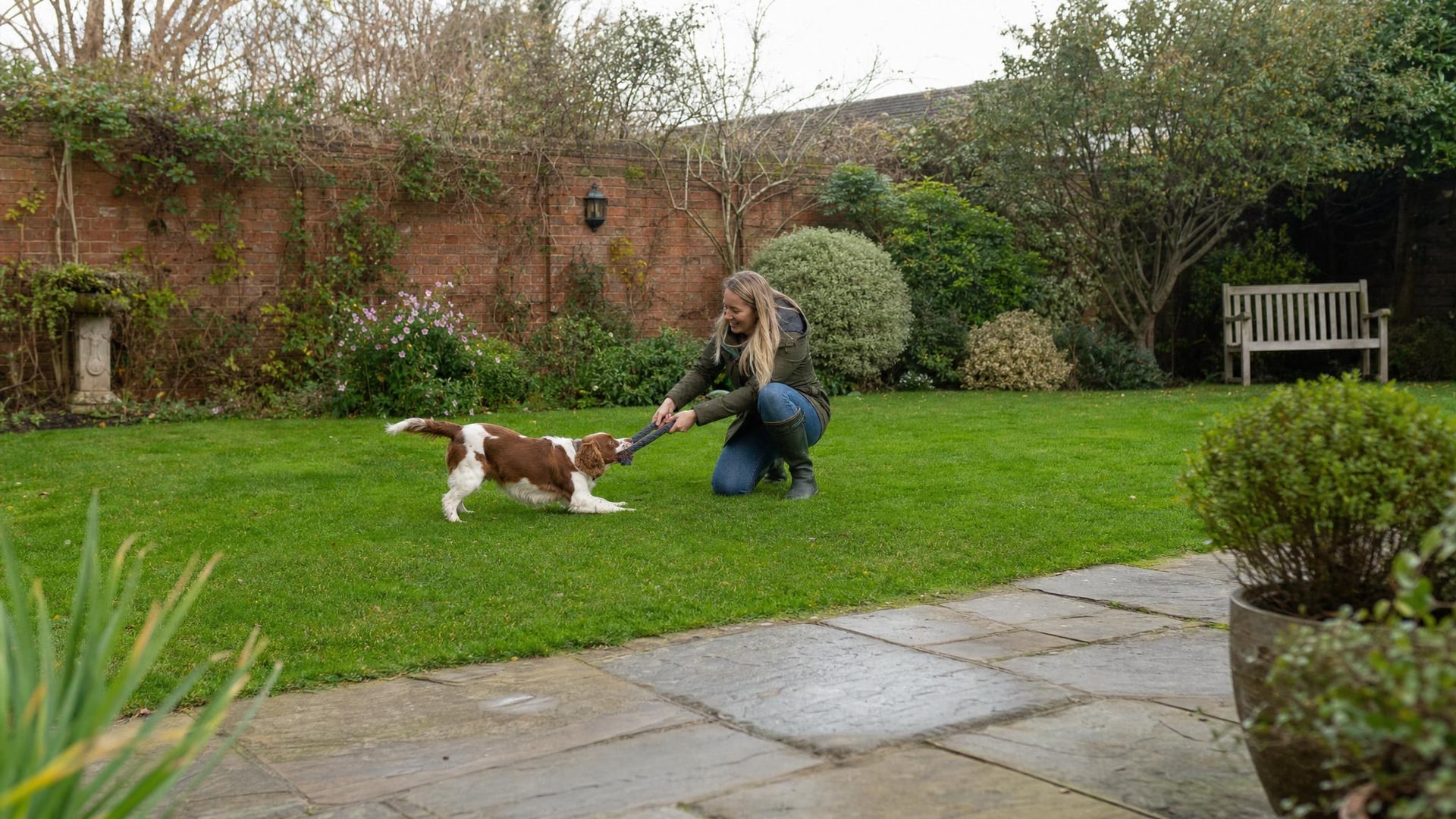
Socialisation is often misunderstood. It does not mean your dog should meet every person, dog and child they see. It means helping them feel calm and safe around normal life.
Good socialisation is controlled exposure. Your dog notices the world, has enough space to process it, and learns that new things are manageable.
A well socialised dog is not necessarily the dog who rushes up to everyone. Often, it is the dog who can see people, dogs, traffic, umbrellas, pushchairs and cyclists without panicking or exploding with excitement.
For puppies, this should begin gently as soon as it is safe and appropriate. Carrying a young puppy to watch the world from a calm distance can be more useful than putting them on the ground in the middle of a busy area.
Let your dog approach people rather than forcing contact. Calm greetings are more useful than excited ones. If someone wants to stroke your dog, ask them to wait until your dog is settled and choosing to interact.
Dogs who are nervous should not be crowded. Dogs who are overexcited should not learn that jumping and pulling gets them access to every person.
Not every dog needs to greet yours. In fact, constant on lead greetings can create frustration, pulling and reactivity.
Parallel walking is often better. Two dogs moving in the same direction with space between them can learn far more calmly than two dogs meeting face to face on tight leads.
Watch body language closely. Loose bodies, curved approaches and the ability to disengage are better signs than stiff posture, staring or frantic pulling. If either dog looks tense, create space.
Use different surfaces, quiet streets, car parks, shop entrances, parks and household noises. Keep sessions short. Leave while your dog is still coping well rather than waiting until they are overwhelmed.
If your dog seems fearful, shuts down or reacts strongly, slow down. Behaviour that looks disobedient may actually be worry. If fear is becoming a pattern, it is worth understanding the signs that anxiety may be involved before pushing into harder situations.
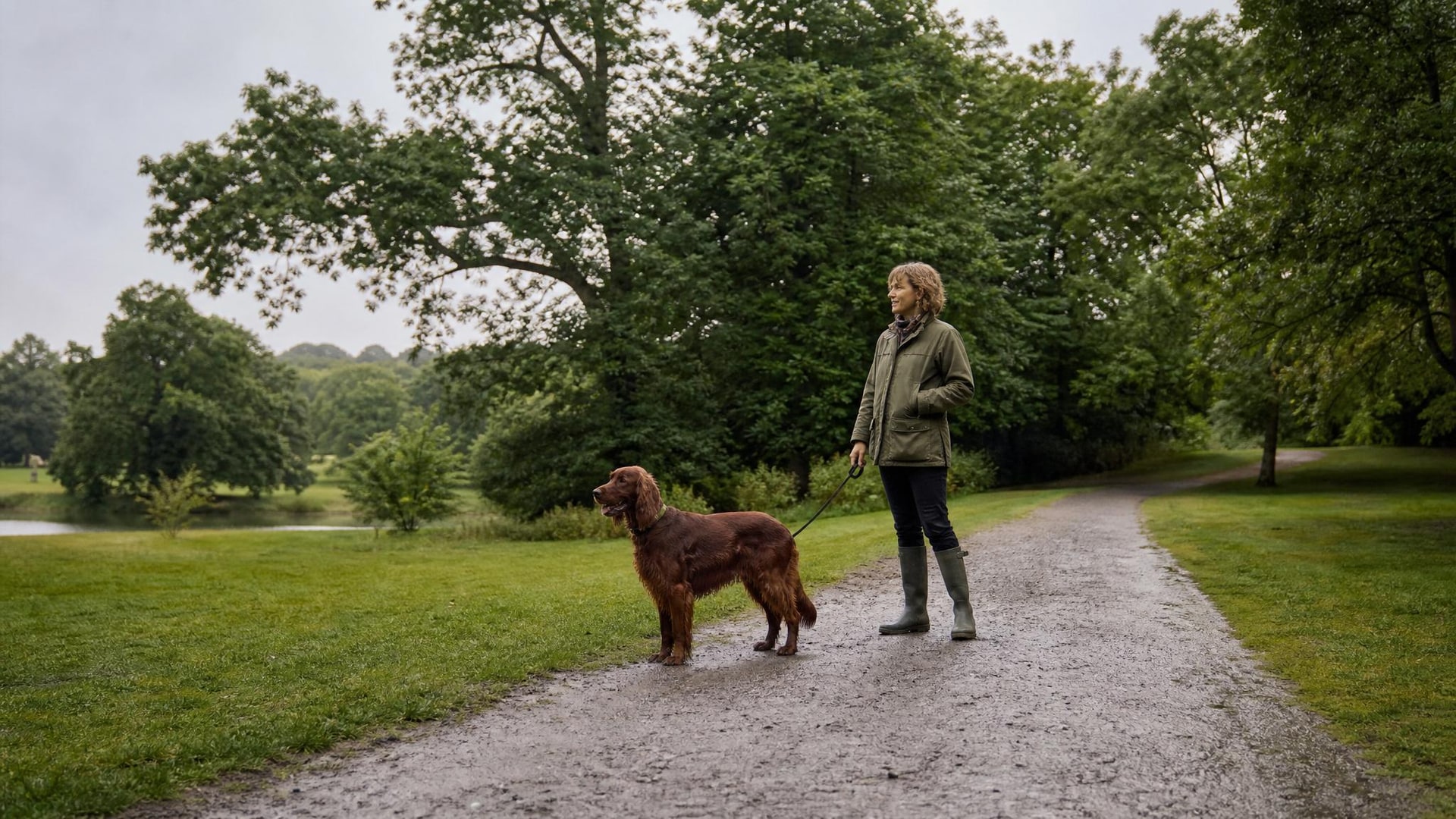
Most training problems are not random. They continue because they work for the dog in some way. The dog gets attention, food, movement, distance, excitement or relief.
Once you understand the payoff, you can change the setup. Management stops the habit getting stronger. Training gives your dog a better option.
Jumping often starts because it gets attention. Even pushing the dog away can feel like interaction. The first step is to remove the reward: no attention while paws are up.
Teach an alternative before visitors arrive. Practise sit, bed or four paws on the floor with family members first. When guests come in, keep the greeting calm and controlled. Reward your dog before they jump, not after you have had to correct them.
Barking can mean different things. Some dogs bark because they are worried. Some bark because they are bored. Some bark because they have learnt it makes people move, look or react.
Do not treat every bark the same. If your dog is alert barking at the window, block the view and reward calm behaviour away from the trigger. If they bark from boredom, increase exercise, enrichment and training. If barking is fear based, they may need more distance and professional support.
Chewing is normal, especially for puppies and young dogs. The problem is usually access. If shoes, remote controls and children’s toys are available, your dog may not know they are off limits.
Manage the environment first. Put tempting items away and provide legal outlets. Chews, food toys and Dog Toys that suit how they naturally like to play can help redirect the behaviour. Praise your dog when they choose the right item.
Food stealing is highly rewarding. If your dog gets a sandwich from the counter once, they may check that counter for weeks.
Clear surfaces while you train. Teach a bed or settle behaviour during food preparation. Reward your dog for staying away from the worktop, and avoid chasing them if they steal something safe. Chasing can turn the whole thing into a game.
Chasing is deeply rewarding for many dogs. It is also risky around livestock, roads and wildlife. Do not rely on hope if your dog has a strong chase instinct.
Use a lead or long line while you work on recall, focus and calm watching from a distance. Reward your dog for noticing movement without launching towards it. This takes time, especially with breeds bred to chase, hunt or herd.
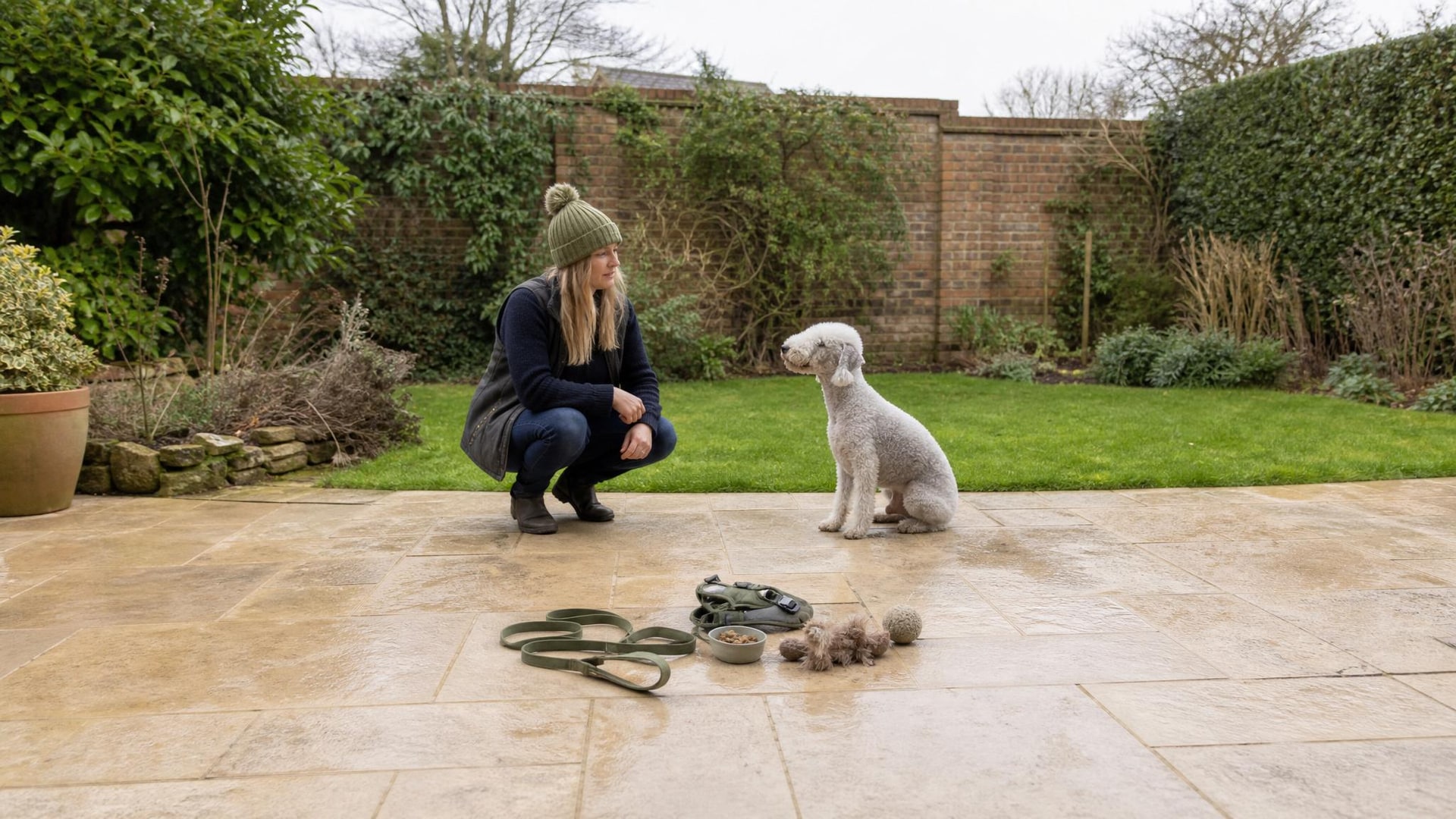
Training should change as your dog grows. The principles stay the same, but the priorities, pace and expectations need to match their stage of life.
Puppy training is not just sit and stay. It is toilet habits, sleep, safe chewing, gentle handling, name response, confidence and learning how the household works.
Short sessions are enough. Puppies tire quickly and can become silly or bitey when overwhelmed. If your puppy has just arrived, getting the first week at home right is often more valuable than rushing into formal obedience.
Adolescence can be frustrating because progress may look uneven. A dog who had good recall as a puppy may suddenly find the environment far more interesting. Pulling, jumping and selective hearing can increase.
This is the stage where many owners stop practising because they feel training has failed. Keep going. Reduce distractions, reward heavily and rebuild the skills in easier settings before expecting reliability in harder ones.
Adult dogs often come with established habits. Some are helpful. Some are not. The advantage is that adult dogs usually have better stamina and focus than puppies, so they can make steady progress with a clear plan.
Choose the behaviours that would make daily life better first. For most owners, that means recall, loose lead walking, calm greetings, settle and leave it.
Senior dogs can still learn. They may simply need shorter sessions, softer surfaces, clearer signals and more patience. Hearing, eyesight, joint comfort and energy levels all affect training.
Training for older dogs should support quality of life. Gentle scent games, calm recall, handling, settling and confidence work can all help. If your dog is entering later life, it is worth thinking about the wider care needs that come with later life alongside training.
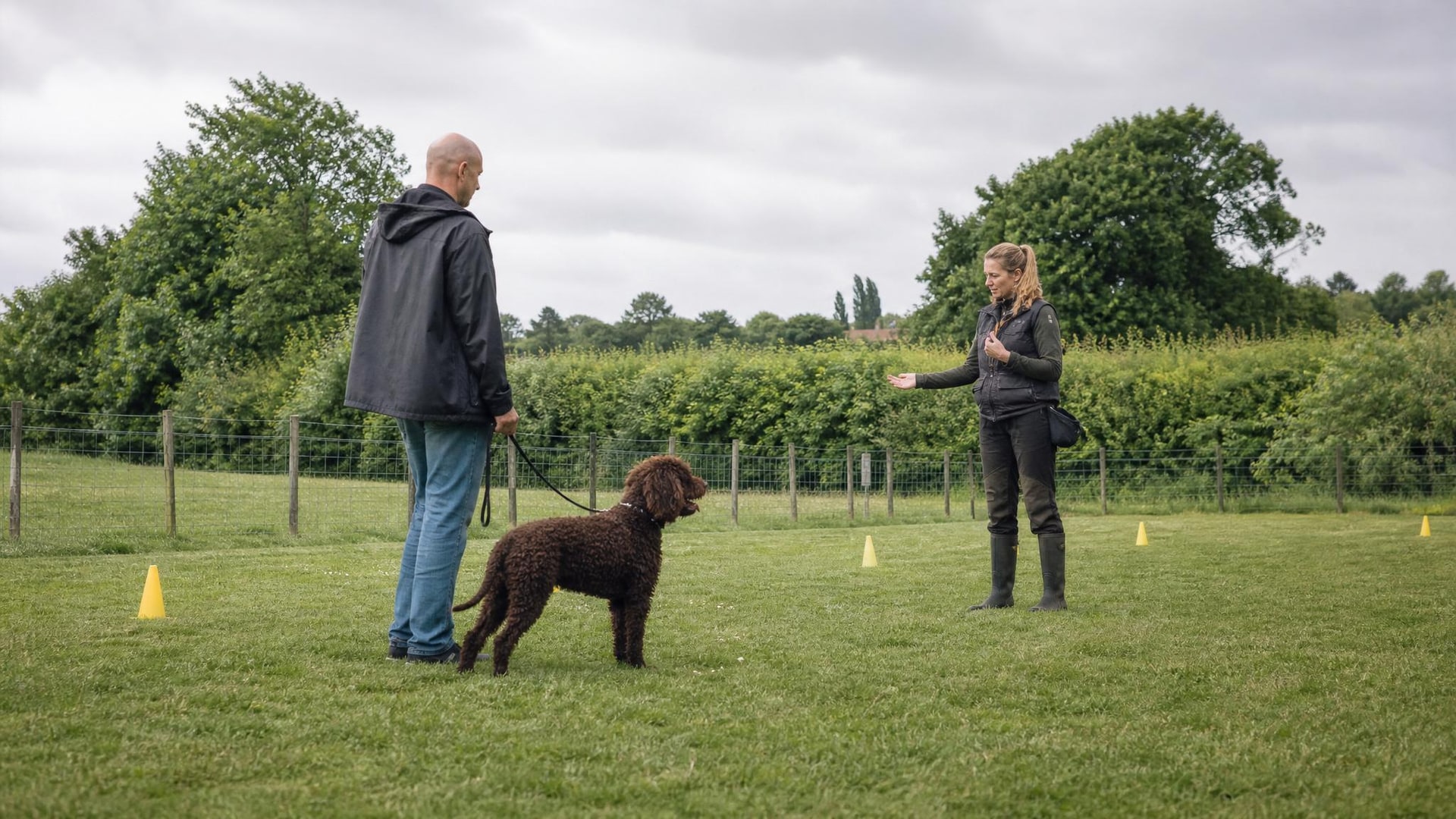
A world class training plan is not built around one huge session on a Sunday. It is built through small, repeated moments that fit into normal life.
The best routine is one you can actually keep. Five minutes done consistently will beat forty minutes done once and forgotten.
| Part of the day | Training opportunity | What to practise | Keep it realistic |
|---|---|---|---|
| Morning garden trip | Your dog is awake and ready to engage | Name response, recall, calm door manners | Pick one behaviour, not five |
| Breakfast | Food is already motivating | Sit, wait, leave it, settle | Use a few pieces of breakfast as rewards |
| Walks | Real life distractions are present | Loose lead, check ins, recall on lead | Choose quieter routes while teaching |
| Play | Your dog is naturally engaged | Drop it, swaps, impulse control | Stop before excitement becomes too high |
| Evening | The house is calmer | Bed, settle, handling, calm praise | End with an easy success |
Meals, doors, walks, play and quiet evenings all create training opportunities. Ask for a sit before the lead goes on. Reward a check in during a walk. Practise bed while you make a cup of tea.
These moments work because they are realistic. Your dog learns that training is not a separate event. It is part of how life works.
Short sessions protect quality. When dogs get tired, they make more mistakes. When owners get frustrated, timing gets worse.
Stop while your dog is still engaged. Ending on a small success is better than pushing for one more repetition and watching the session fall apart.
A good session should leave your dog wanting another go. If they are wandering away, grabbing at treats, barking in frustration or making repeated mistakes, the useful learning window has probably closed.
A skill is not simply ‘trained’ or ‘not trained’. It may work in the kitchen, fail in the garden, work on a quiet street and disappear near another dog.
That information is useful. Keep a simple note of where each skill works reliably and where it breaks down. Then practise at the edge of your dog’s current ability, not miles beyond it.
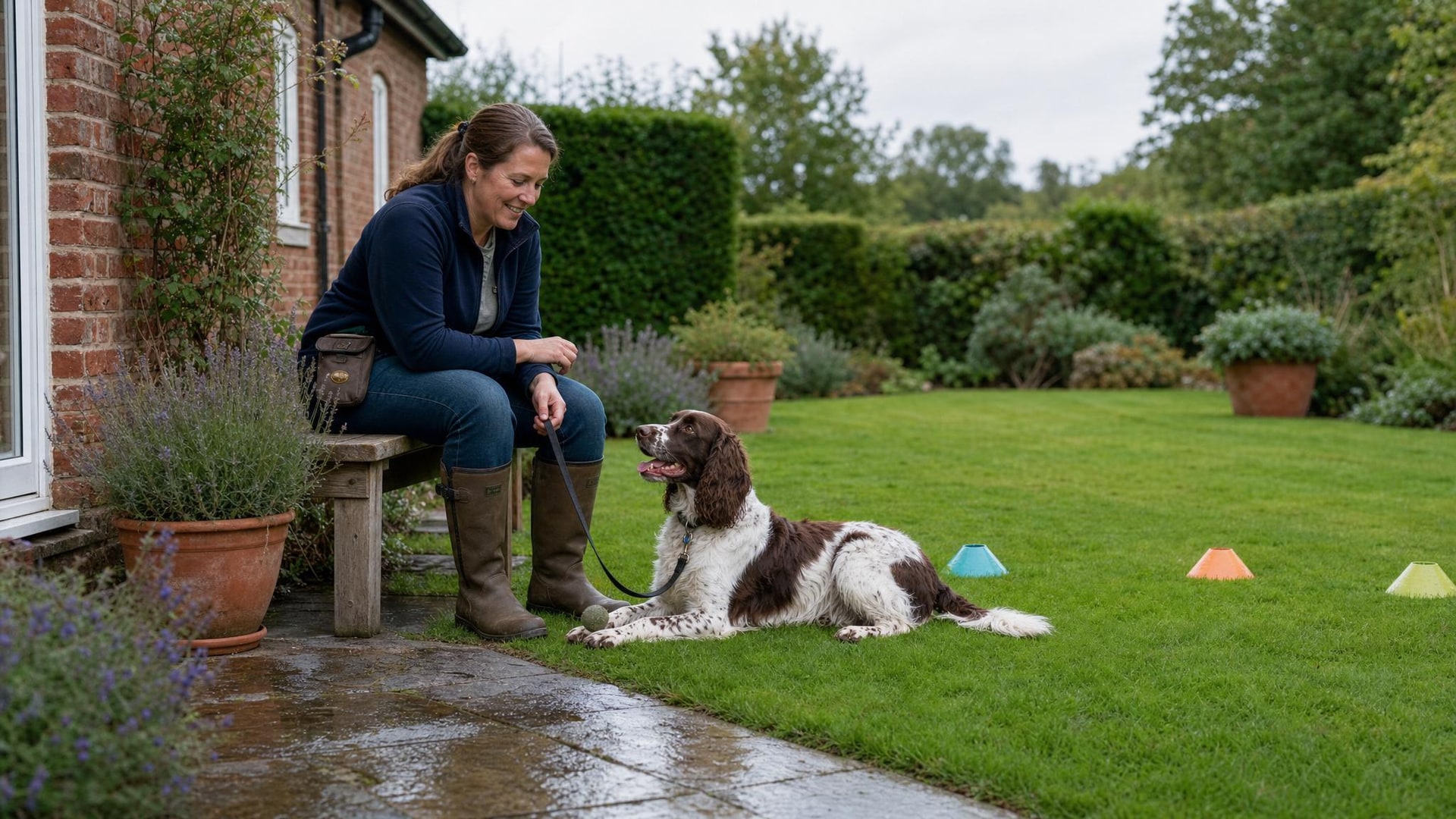
Most training mistakes are fixable. The important thing is to spot them early, because repeated mistakes can accidentally teach the very behaviour you are trying to stop.
If your dog is allowed to jump on you in old clothes but not when you are dressed to go out, that distinction may make sense to you. It probably does not make sense to them.
Dogs learn clear patterns more easily than exceptions. Decide what the rule is and make sure everyone in the household follows it.
Owners often increase difficulty in three ways at once: more distance, more time and more distractions. That is where training falls apart.
If you are teaching stay, increase duration before distance. If you are teaching recall, increase distance before major distractions. Make one thing harder at a time.
Think of each skill as having levels. Your dog may be on level one indoors and level five outdoors. Skipping levels does not speed training up. It usually creates confusion and weakens the cue.
Repeating a cue teaches your dog that the first cue does not matter. If you say “come” six times before anything happens, the word becomes background noise.
Say the cue once. If your dog cannot respond, help them succeed or make the situation easier. Then practise again at a level where the cue still has meaning.
Attention is a reward for many dogs. So is movement, food, being chased, being let through a door or reaching another dog.
If barking gets you to look, jumping gets hands on the dog, or pulling gets them to the park faster, those behaviours are being reinforced. The fix is to reward the behaviour you want before the unwanted one takes over.
If you only train when your dog is already overexcited, worried or distracted, you are always working at the hardest level.
Build the skills when things are easy. Then they have a chance of working when life becomes more difficult.
Practise calm behaviours when your dog is already calm. Practise recall before they are fully distracted. Practise loose lead walking before the lead is tight. Prevention gives you better timing than damage control.
Some problems need professional support. That is not a failure. It is responsible dog ownership, especially when behaviour affects safety or quality of life.
Choose help carefully. Look for qualified, reward based trainers or behaviourists who explain their methods clearly and do not rely on fear, intimidation or harsh handling.
Reactivity can look like barking, lunging, spinning, growling or frantic pulling around triggers. The trigger might be dogs, people, traffic, bikes or specific environments.
Reactivity usually needs distance, careful exposure and a plan that keeps your dog under threshold. Simply forcing the dog closer often makes the problem worse.
Progress is often measured in calmer recovery, not instant silence. If your dog can notice a trigger and turn back to you sooner than last week, that is real progress.
Aggression should always be taken seriously. If your dog has bitten, snapped, guarded intensely or made people feel unsafe, get qualified help.
Do not punish warning signs such as growling. Growling is information. If you suppress the warning without changing the emotion underneath, you may make the dog less predictable.
Keep people and animals safe while you wait for help. That may mean leads, barriers, muzzles introduced positively, avoiding known triggers and changing routines temporarily.
Separation problems are not solved by letting a dog panic until they stop. A quiet dog is not always a calm dog. Some dogs shut down.
True separation distress needs gradual work at a level your dog can cope with. A vet or qualified behaviourist can help you build a safe plan.
Signs can include pacing, barking, howling, toileting, destructive behaviour, drooling or frantic greetings. Cameras can help you understand what happens after you leave rather than guessing.
Guarding food, toys, beds or stolen items needs careful handling. Taking things by force can make guarding worse because it confirms the dog’s fear that valuable items disappear when people approach.
Management, swaps and professional guidance are usually safer than confrontation.
Early signs matter. Freezing, hovering over an item, turning the head away, eating faster or giving a hard stare can all come before growling. Treat those signs seriously.
Basic skills can improve within a few weeks, but reliable behaviour takes longer because dogs need practice in different places. Recall, loose lead walking and calm behaviour around distractions usually need ongoing work.
Yes. Older dogs can learn new skills and improve old habits. Sessions may need to be shorter and gentler, especially if the dog has stiffness, hearing changes, eyesight changes or lower energy.
Short daily sessions usually work best. Five to ten minutes once or twice a day, plus small training moments during walks and normal routines, is often more useful than one long session.
Training can begin as soon as your dog comes home, as long as it is age appropriate and reward based. Puppies should start with routine, confidence, name response, handling and short basic skills.
Treats are useful when teaching a new skill because they are quick and clear. As the behaviour becomes more reliable, you can mix in praise, play, toys, sniffing and other real life rewards.
Make the task easier. Move further from distractions, use a better reward and check whether your dog understands the cue in that setting. Repeating the command again and again usually makes it weaker.
Dog training is not about creating a perfect dog. It is about building a shared language that makes life safer, calmer and more enjoyable.
The basics matter because they show up everywhere. Recall affects freedom. Loose lead walking affects daily walks. Leave it and drop it affect safety. Bed and settle affect how peacefully your dog can live in a busy home.
Progress will not be perfectly straight. Some days will be easy. Some will remind you that your dog is still learning. That is normal.
The owners who get the best results are usually not the ones who train for hours. They are the ones who stay consistent, reward clearly, adjust when their dog is struggling and keep practising in real life.
Start with one skill. Make it easy enough for your dog to succeed. Then build from there.
Basic skills can improve within a few weeks, but reliable behaviour takes longer because dogs need practice in different places. Recall, loose lead walking and calm behaviour around distractions usually need ongoing work.
Yes. Older dogs can learn new skills and improve old habits. Sessions may need to be shorter and gentler, especially if the dog has stiffness, hearing changes, eyesight changes or lower energy.
Short daily sessions usually work best. Five to ten minutes once or twice a day, plus small training moments during walks and normal routines, is often more useful than one long session.
Training can begin as soon as your dog comes home, as long as it is age appropriate and reward based. Puppies should start with routine, confidence, name response, handling and short basic skills.
Treats are useful when teaching a new skill because they are quick and clear. As the behaviour becomes more reliable, you can mix in praise, play, toys, sniffing and other real life rewards.
Make the task easier. Move further from distractions, use a better reward and check whether your dog understands the cue in that setting. Repeating the command again and again usually makes it weaker.